Part one of the raised bed rehabilitation: what was wrong with the bed we inherited, and everything that happened before a single plant went in. Part two covers what went in and how the season went.
The bed
It runs about 20 ft long and 2 ft deep, a brick bed set against a brown wood and brick wall, facing full south. That is a generous amount of light and a punishing amount of heat — in summer the surface soil temperature routinely reaches 130 °F.
In front of the bed is a river rock strip: about 3 in of smooth stone over geotextile fabric, over soil compacted close to solid. The fabric is still intact. That is not the failure.
The failure is that inches of soil and dust have collected on top of it over the years, and weeds germinate perfectly well in that. Once they are up, their roots work down and entrain themselves in the spun textile, which is what makes them so unpleasant to pull. This is the flaw in weed barrier generally: it stops growth from below, does nothing about growth from above, and kills the soil underneath it in the meantime. Worst near the downspout, where the extra water collects.
That is its own project and its own post.
The soil was the problem
The bed was filled with a peat-based potting mix, or something close to it, and it had been breaking down for years before we got here. What was left was powdery — closer to dust than to soil — and extremely hydrophobic.
Our first spring and summer in the unit I planted peppers and tomatoes in it. Watering was frequent and mostly futile. Water beaded on the surface and ran off, or found a channel and drained straight through without wetting anything on the way down.
I tried soil surfactants. They worked, briefly. Each time, the mix went back to shedding water shortly after, and I was back to watering a bed that would not take water.
At that point patching it stopped making sense. The plan became: dig it all out, bag it, put it in the dumpster, and start over with a mix I picked.
The new mix
This was never going to be a vegetable bed. Against a south-facing wall at 130 °F, the plants that will actually do well are the ones adapted to dry, fast-draining, mineral soils — so the goal was to build something that mimics a native habitat rather than something rich.
That ruled out any organic-based potting mix. Organic matter is exactly what failed here the first time: it breaks down, loses its structure, and ends up as the dust I dug out. I wanted a soil that drains well and holds up for the life of the bed.
All of it came from Colorado Materials in Longmont. I ordered 2.25 yd³:
| Material | Volume |
|---|---|
| Expanded shale | 0.5 yd³ |
| Topsoil and compost, 70/30 | 1.75 yd³ |
| Total | 2.25 yd³ |
The expanded shale is the drainage component — lightweight, and unlike an organic amendment it does not collapse or degrade as it ages. The topsoil is mineral, so it will not degrade either, and Longmont is close enough that it is relevant to plants that are supposed to grow here. The compost fraction came in a little higher than I wanted, but so it goes.
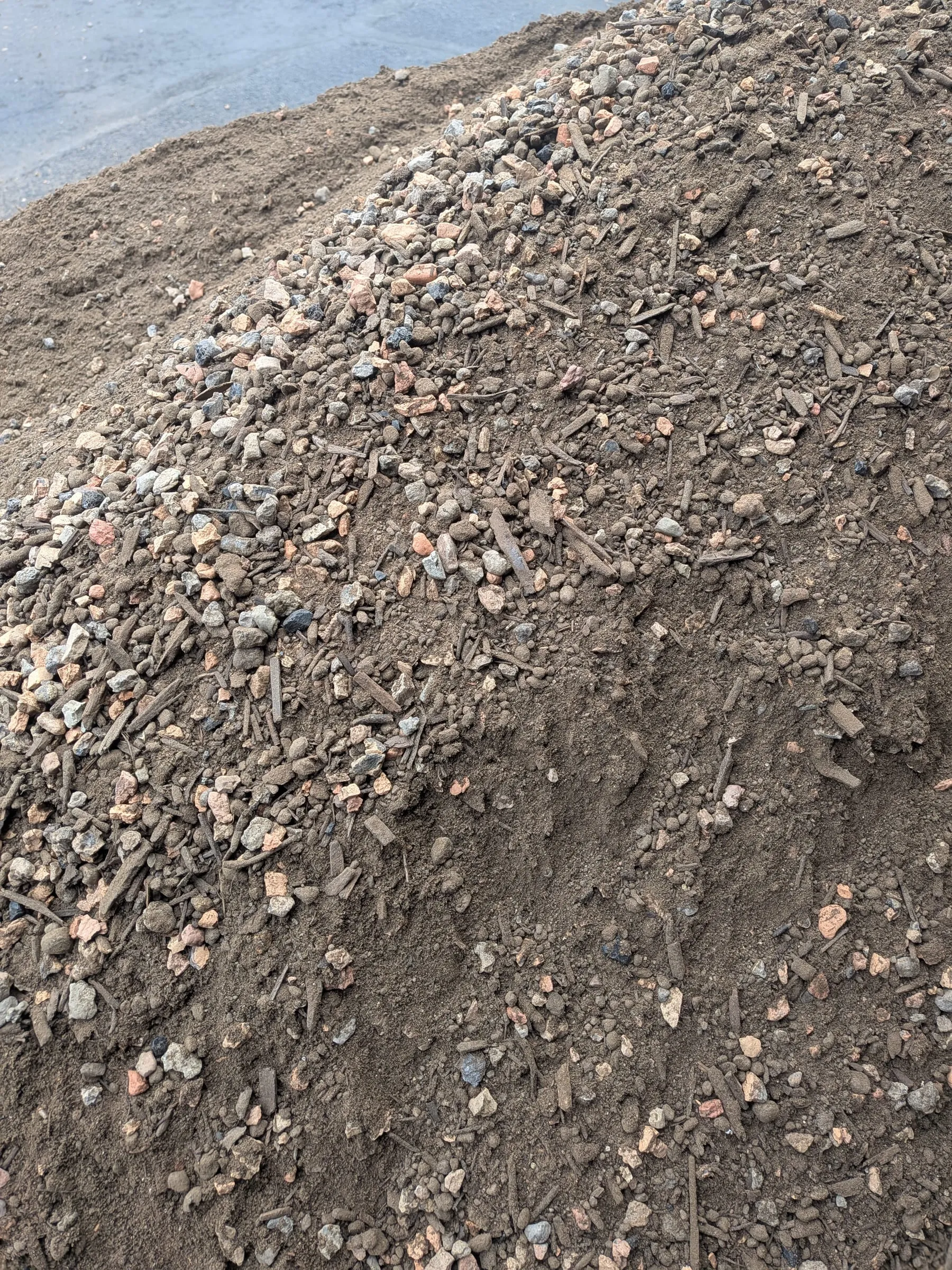
The mix up close — the pale angular pieces are the expanded shale
Digging it out
I dug the bed down at least 2 ft, until the last of the potting mix was gone and I was on native soil at the bottom.
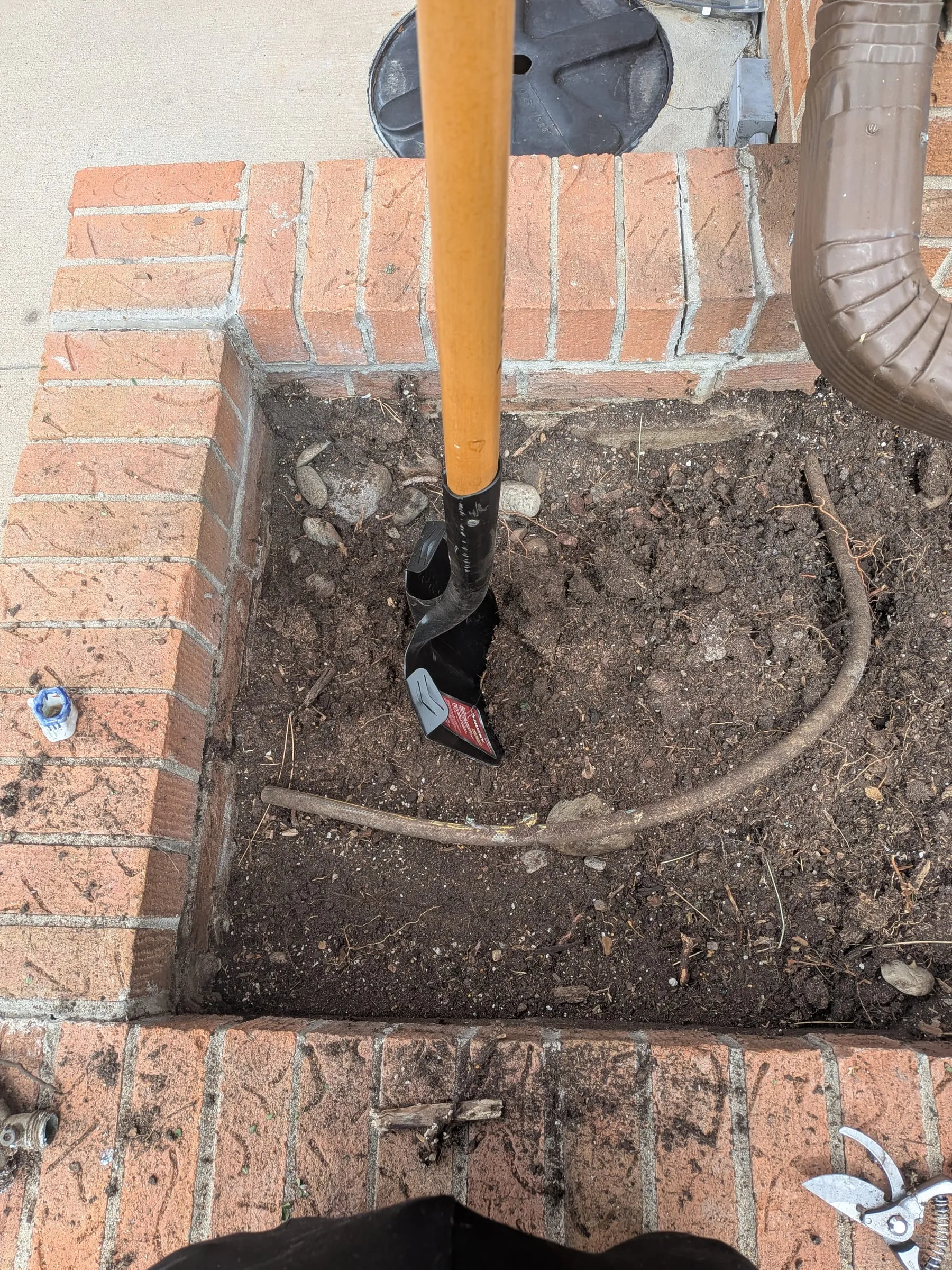
The only photo I took of the dig. It went down about another 8 in from here
A few things in the bed had been there long enough to have made themselves at home. A wild rose had rooted down through the dead potting mix and anchored hard into the native soil underneath. I took a cutting before it came out and propagated it — it is planted elsewhere in the community now.
Hauling it in
This is a condo unit with an HOA, a public driveway and a public sidewalk, so the delivery could not be dumped at the bed. The pile went across from it, on a tarp in front of my garage — a 20 to 30 ft walk each way.
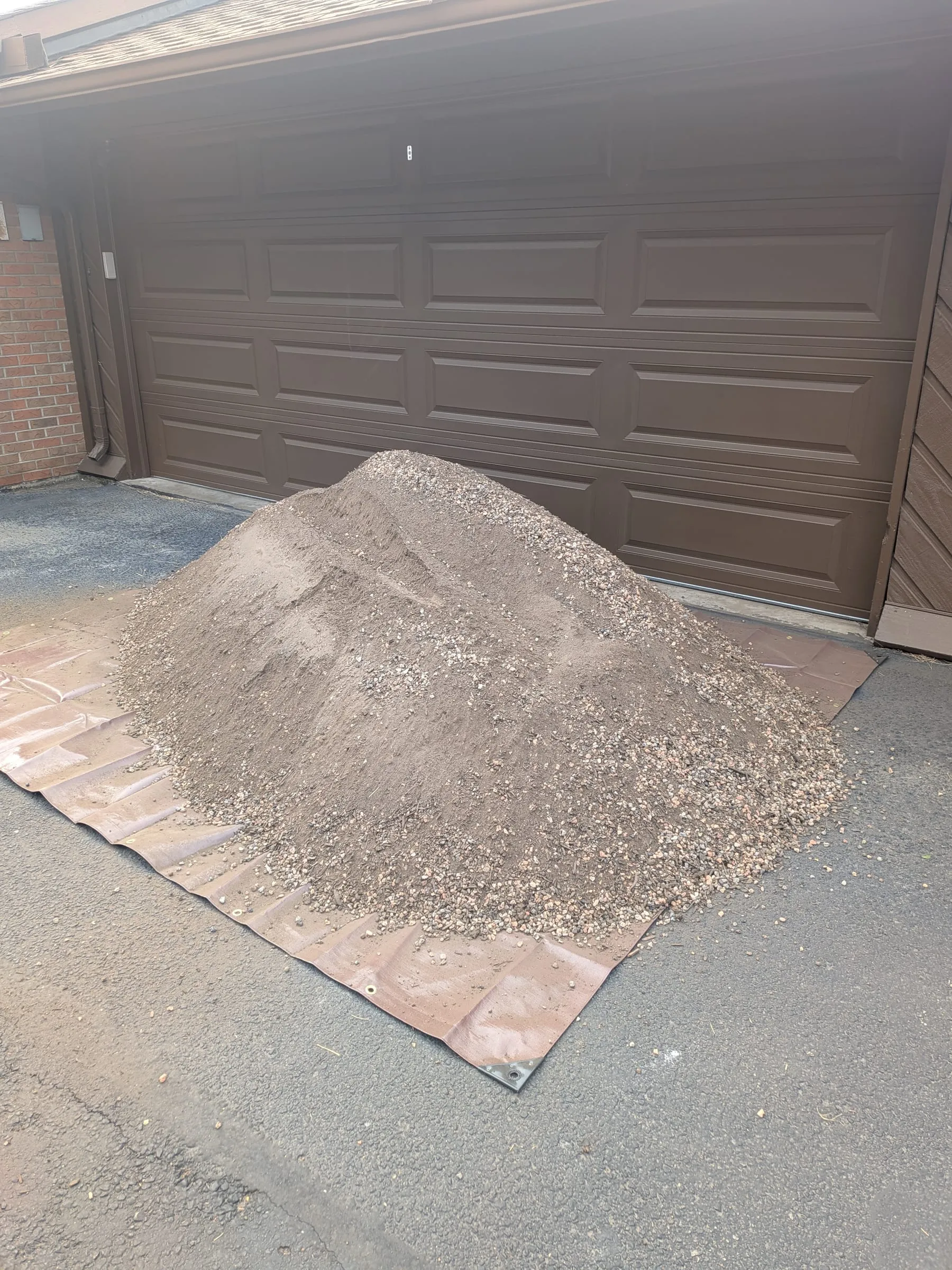
All 2.25 yards of it, across the drive from the bed
I moved the whole pile in five gallon buckets, two at a time at roughly 50 lb each. At least 30 round trips, somewhere around 3,000 lb of soil. Renting a wheelbarrow would have been the better call.
Filling
The first six to eight inches went in at the bottom and got turned into the native soil, so the new mix and what was underneath meet gradually rather than at a hard line. From there I filled straight up, wetting each layer as I went.
I filled to the brim. It has settled an inch or two since, which is about where I want it.
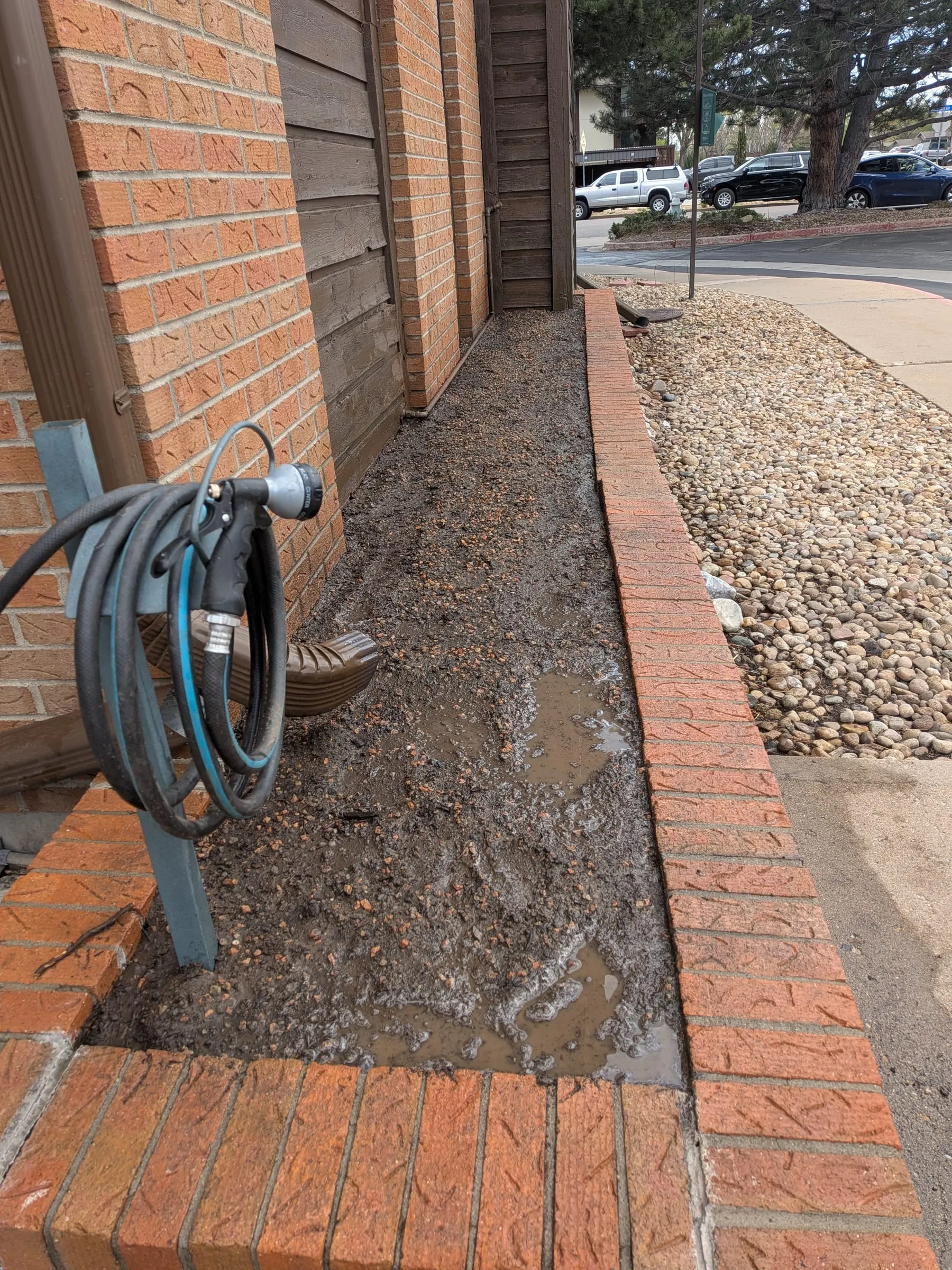
Filled and watered in. The old mix would not have taken water like this
Two 27 gallon totes of the mix were left over. They are in the garage as spare.
With the bed full, the rest is the planting and the season.