Part two of the raised bed rehabilitation. Part one covers the old soil and the rebuild — the bed this one starts from is 20 ft of fresh topsoil, compost and expanded shale, filled to the brim.
This is what went into it, and how each thing handled the first season.
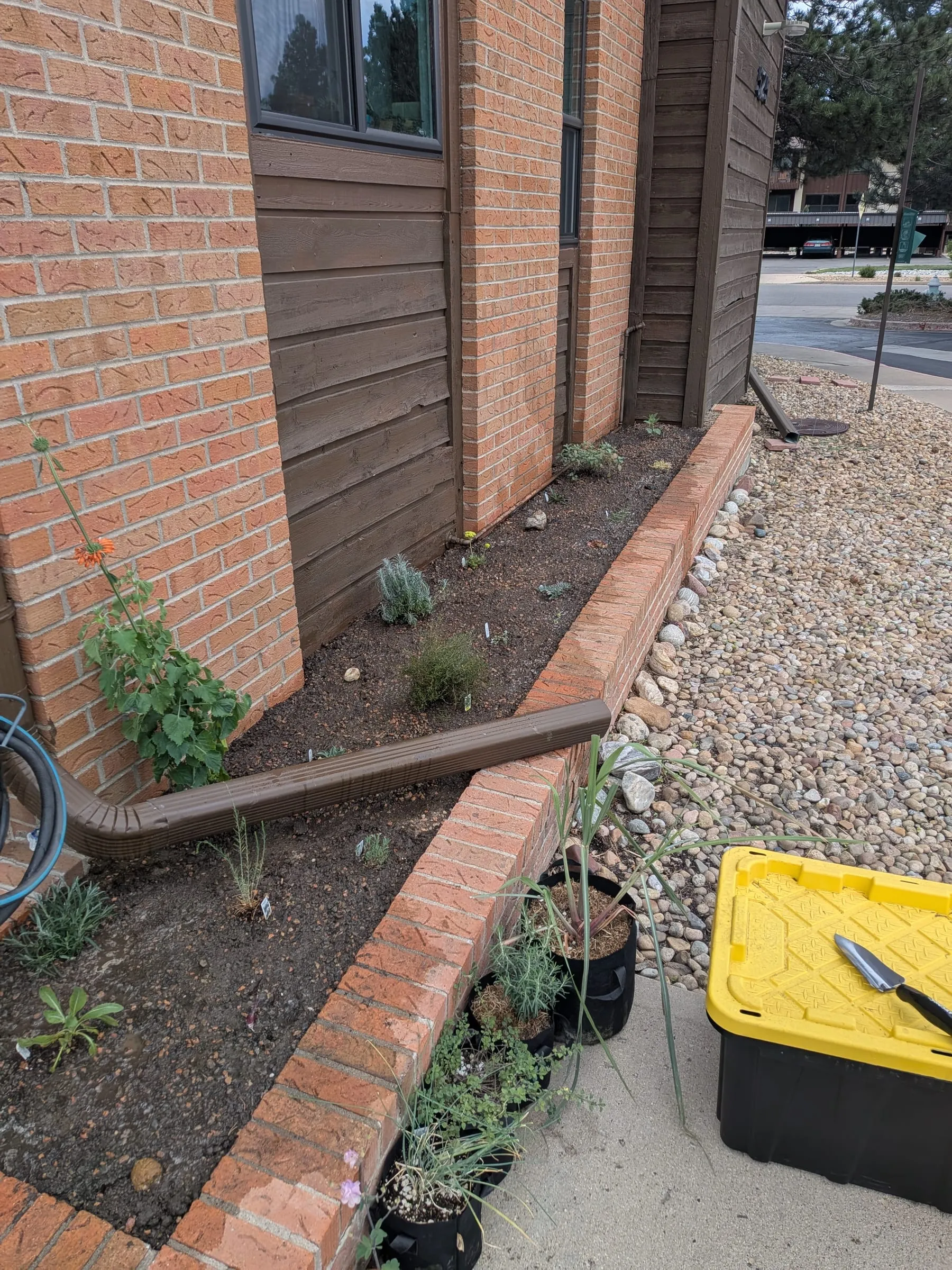
Planting day, 25 April
The approach
The bed is against a south-facing wall that reaches 130 °F at the soil surface in summer, so almost everything here is either a Front Range native or something xeric enough to pass for one. Most of the natives came from a local native nursery. The rest came from seed, from cuttings rooted in perlite indoors, from houseplants put outside as an experiment, and in three cases from the side of the road.
Every perennial in here is being judged on the usual maxim — year one sleep, year two creep, year three leap — so most of what follows is a note on establishment rather than a verdict.
Every “before” photo below was taken on 24 April, the day before planting, with the plants still in their pots. Every “after” was taken on 5 September, a little over four months later. Anything grown from seed or sown directly has no before photo.
Down the bed, left to right
Creeping thyme
From seed. A smooth-leaved, non-hairy variety with a more upright habit than the other creeping thyme in the bed, though it still sprawls and spreads. No flowers yet this year.
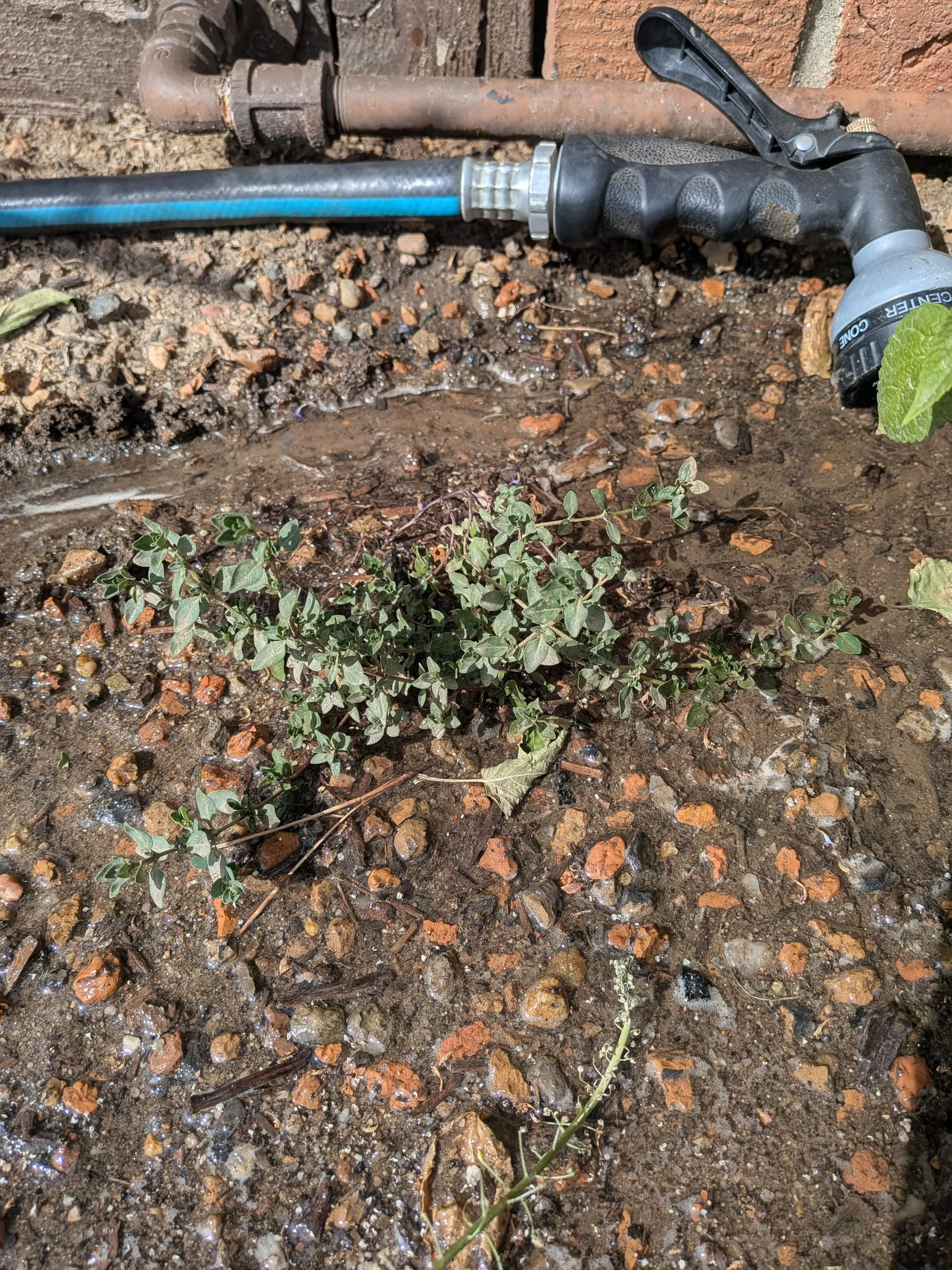
September
Klip dagga — Leonotis nepetifolia
From seed, started indoors as an annual. It has grown to an enormous size, with a main stem almost 1 in across. Very drought tolerant, fast growing, showy, well suited to the heat, and popular with pollinators.
As a side note, it turns up in the ethnobotanical literature for its traditional and ceremonial use, and is commonly described as mildly psychoactive — though that reputation rests more on traditional reports than on established pharmacology, and attaches more firmly to its relative Leonotis leonurus.
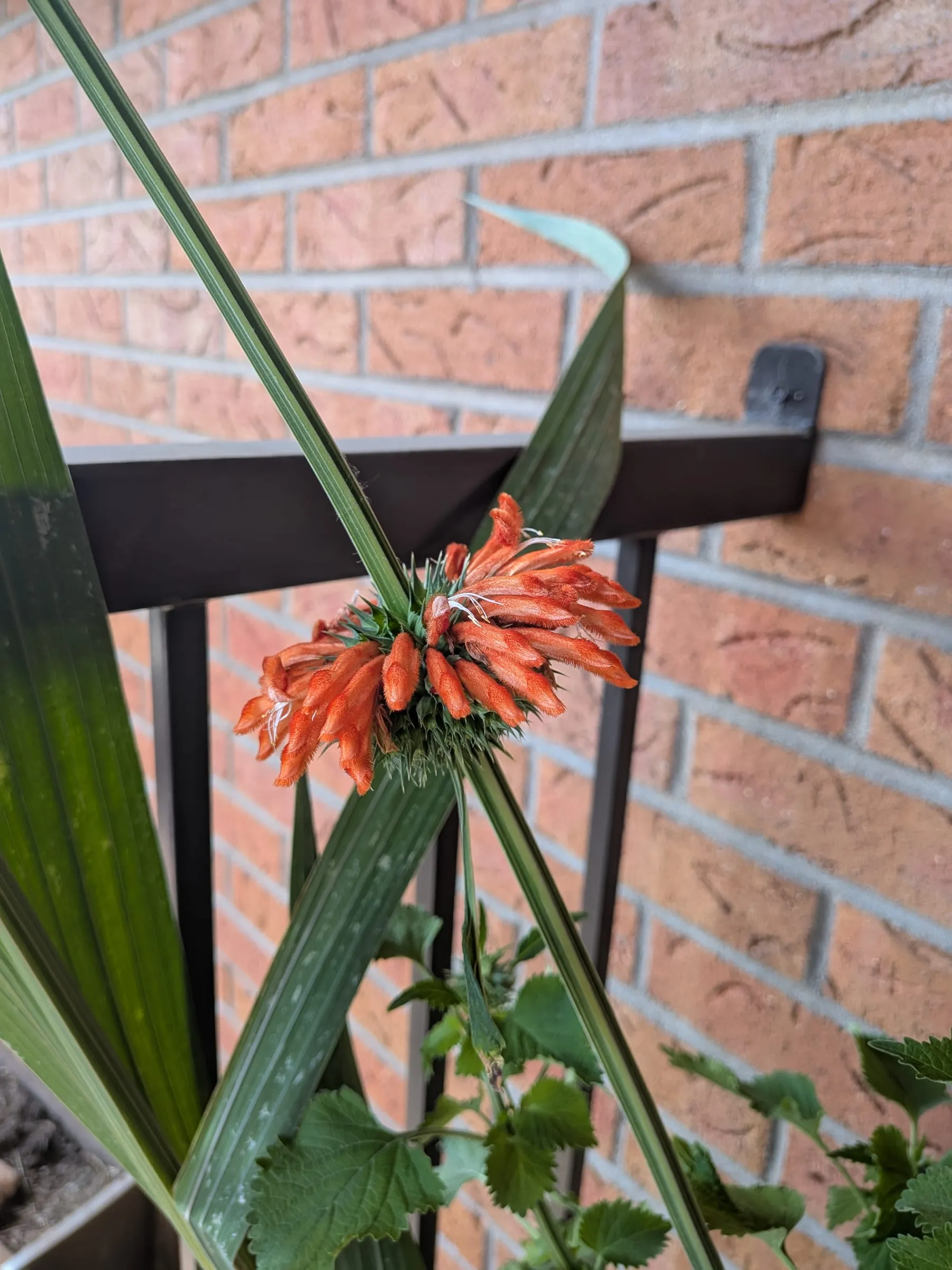
April
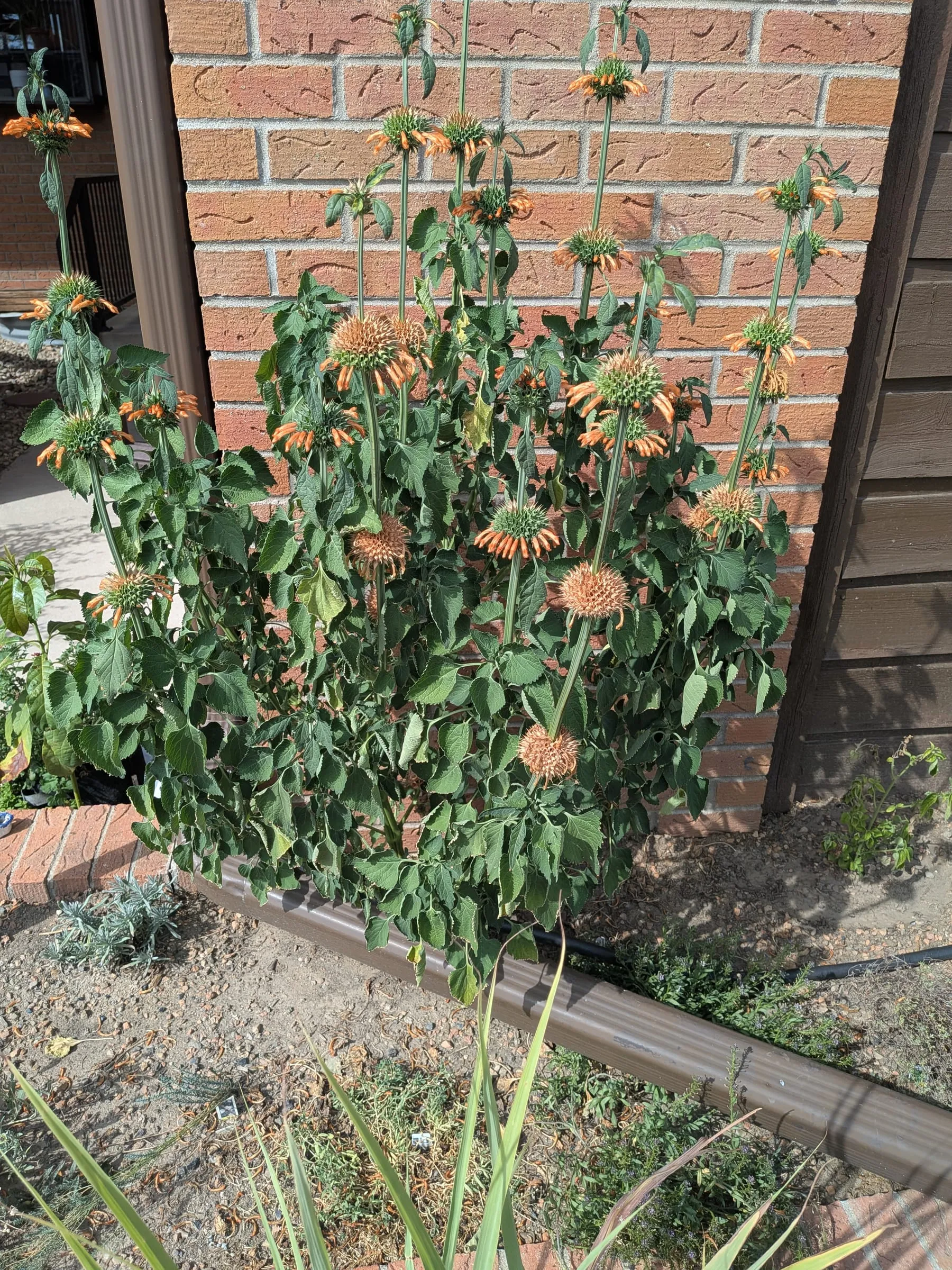
September
Creeping baby’s breath — Gypsophila repens
Local native nursery. Low and creeping. It was overshadowed by seed-sown alyssum for much of the summer, and I recently cut that back to let its roots make better use of the resources. It grew well this year but thinned dramatically toward late summer. Likely to come back strong.
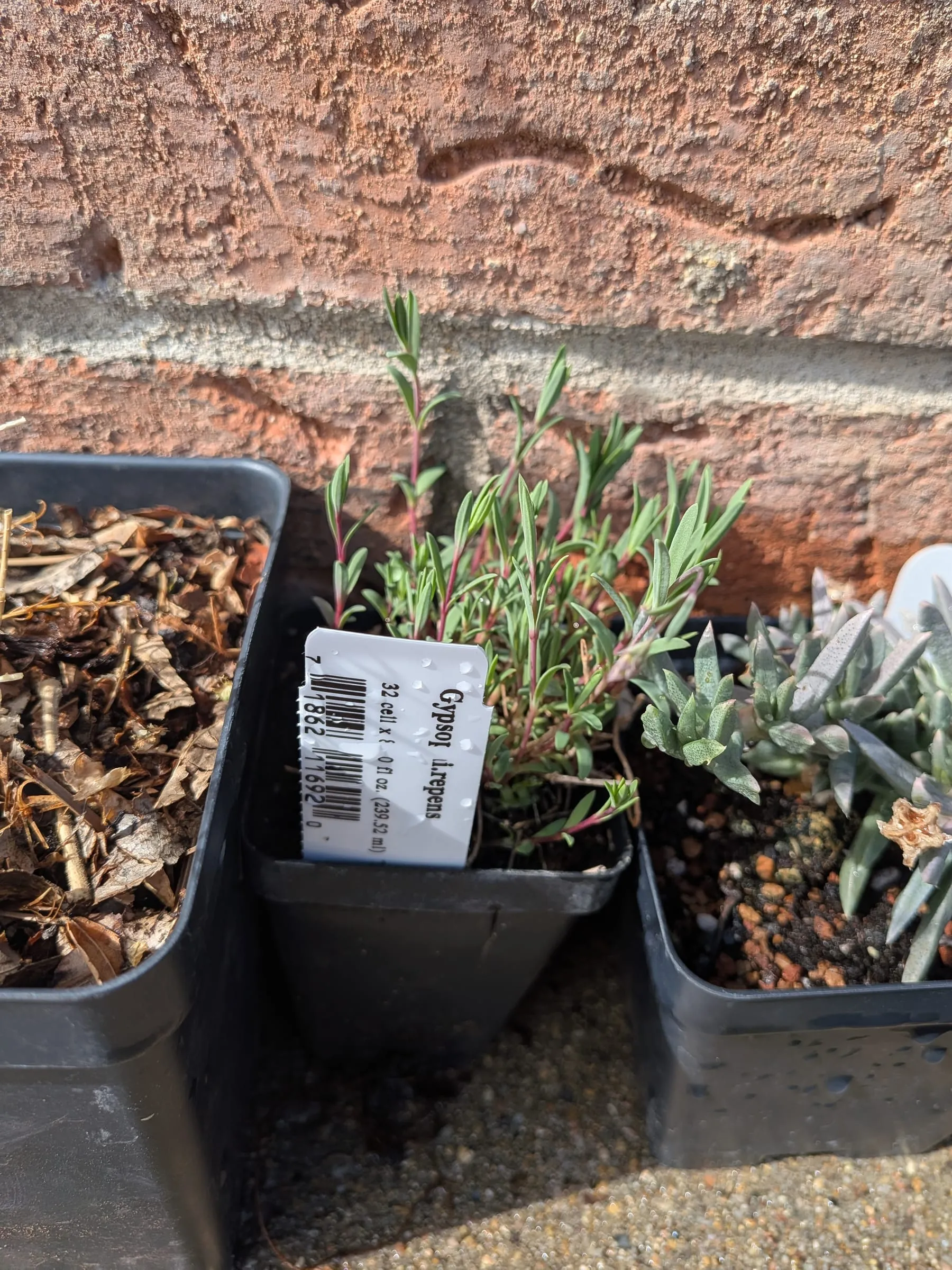
April
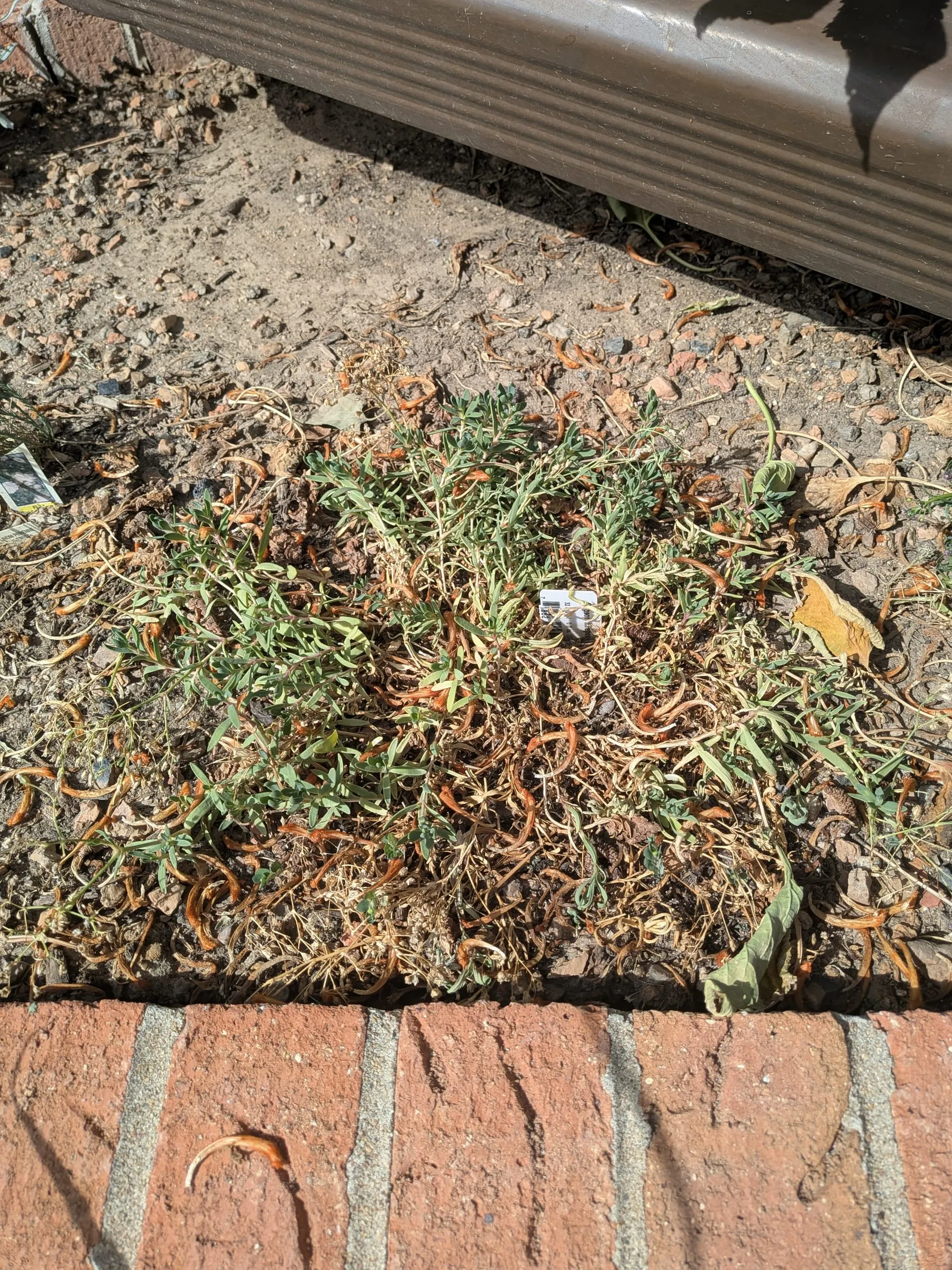
September, after being cut back
Chocolate daisy — Berlandiera lyrata
Local native nursery. Grew well, then got leggy and tipped over, growing horizontally away from the building. The flowers do indeed smell like warm milk chocolate early in the day.
April
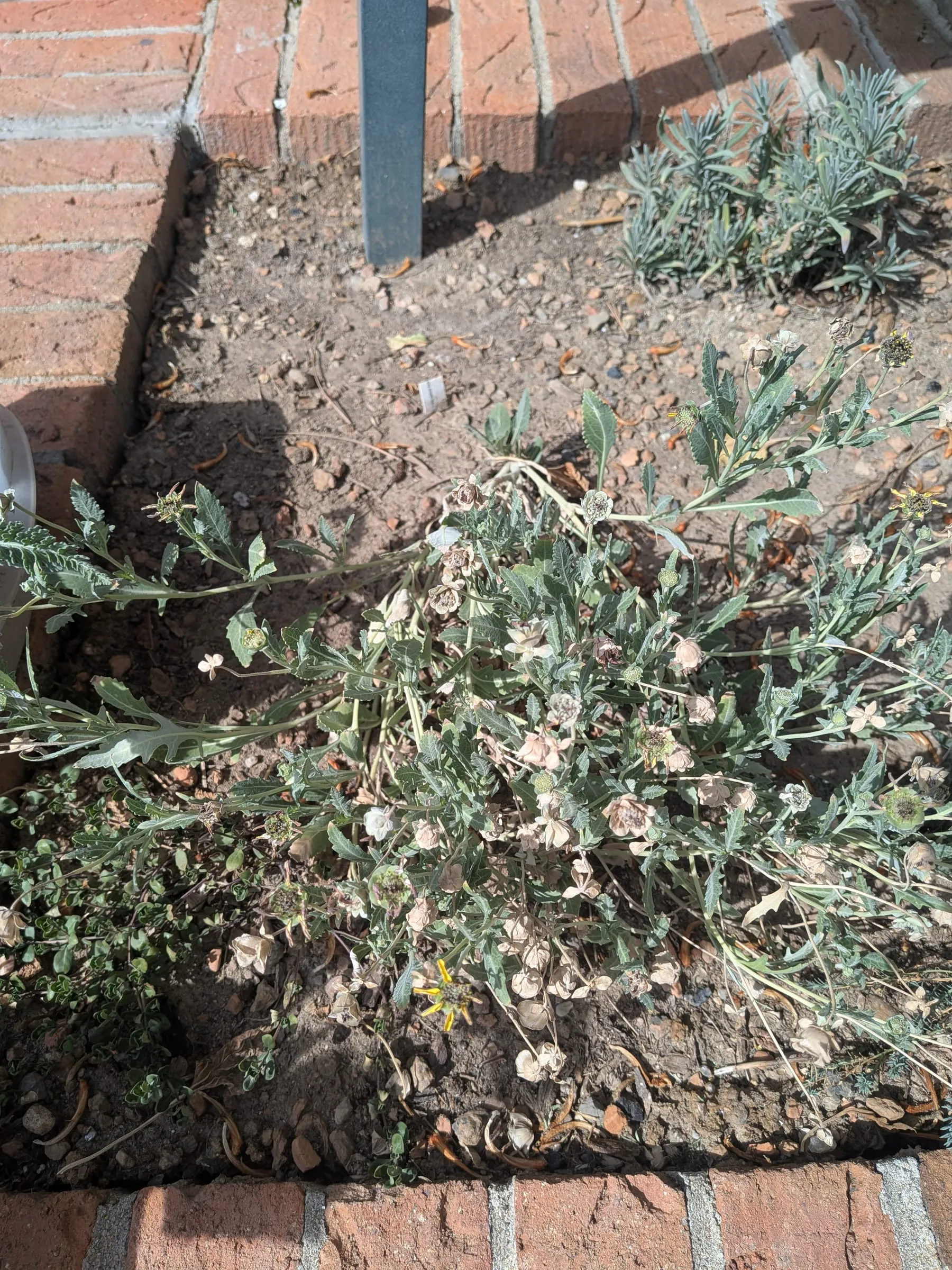
September — leggy, and heading away from the wall
Lavender #1, species unknown
Taken from a friend’s indoor herb garden, so I am not sure it is actually cold hardy. It has not done particularly well — tips often burned, and low growth. It was labelled as tarragon when I got it. It smells like lavender.
It has not flowered, but I do not hold that against it. Lavender routinely takes more than one season to bloom, and longer still from seed. The burnt tips are the real complaint, and an indoor-grown plant moved to a south wall without much hardening off is a fair explanation for them.
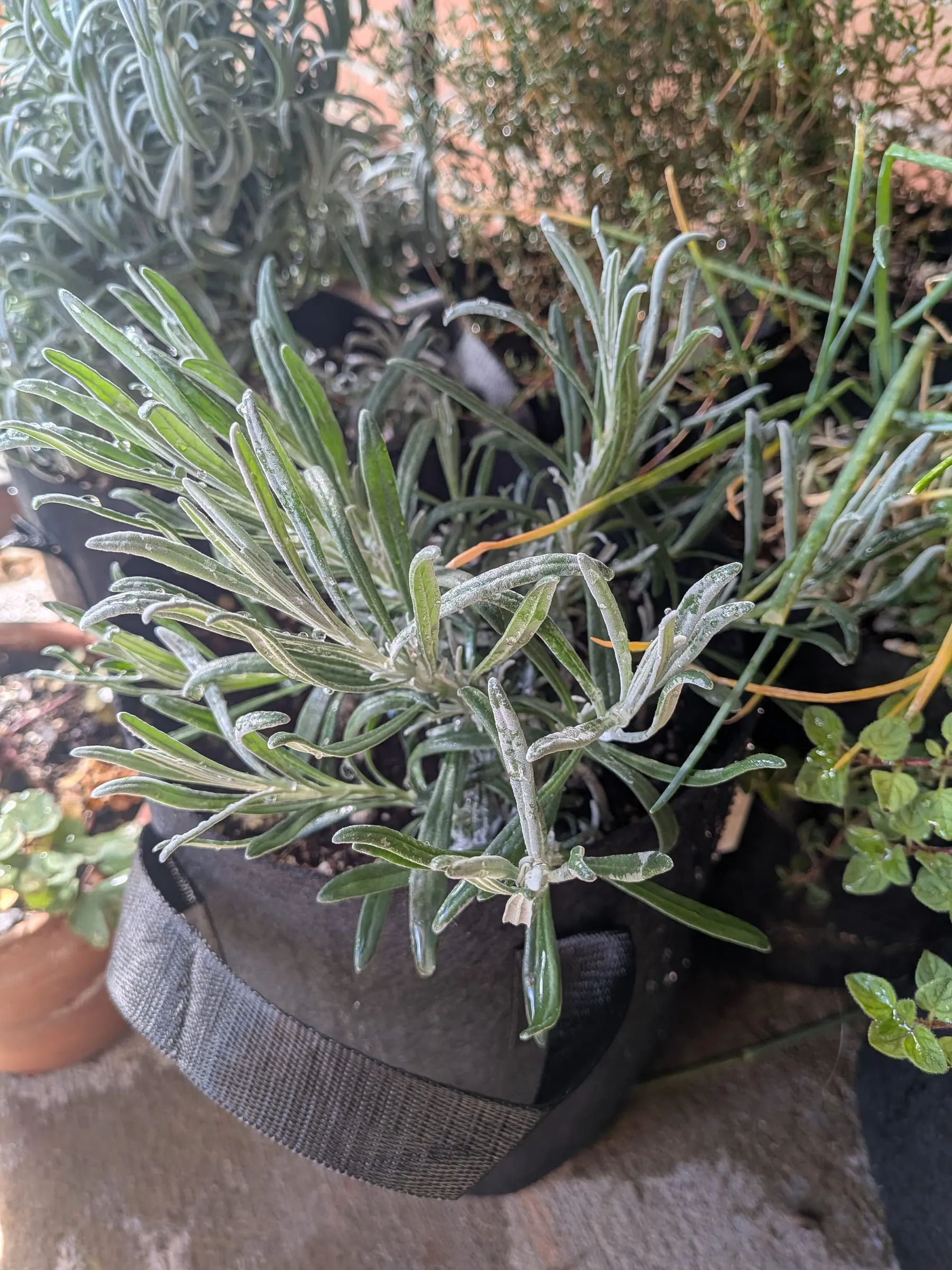
April, still labelled tarragon
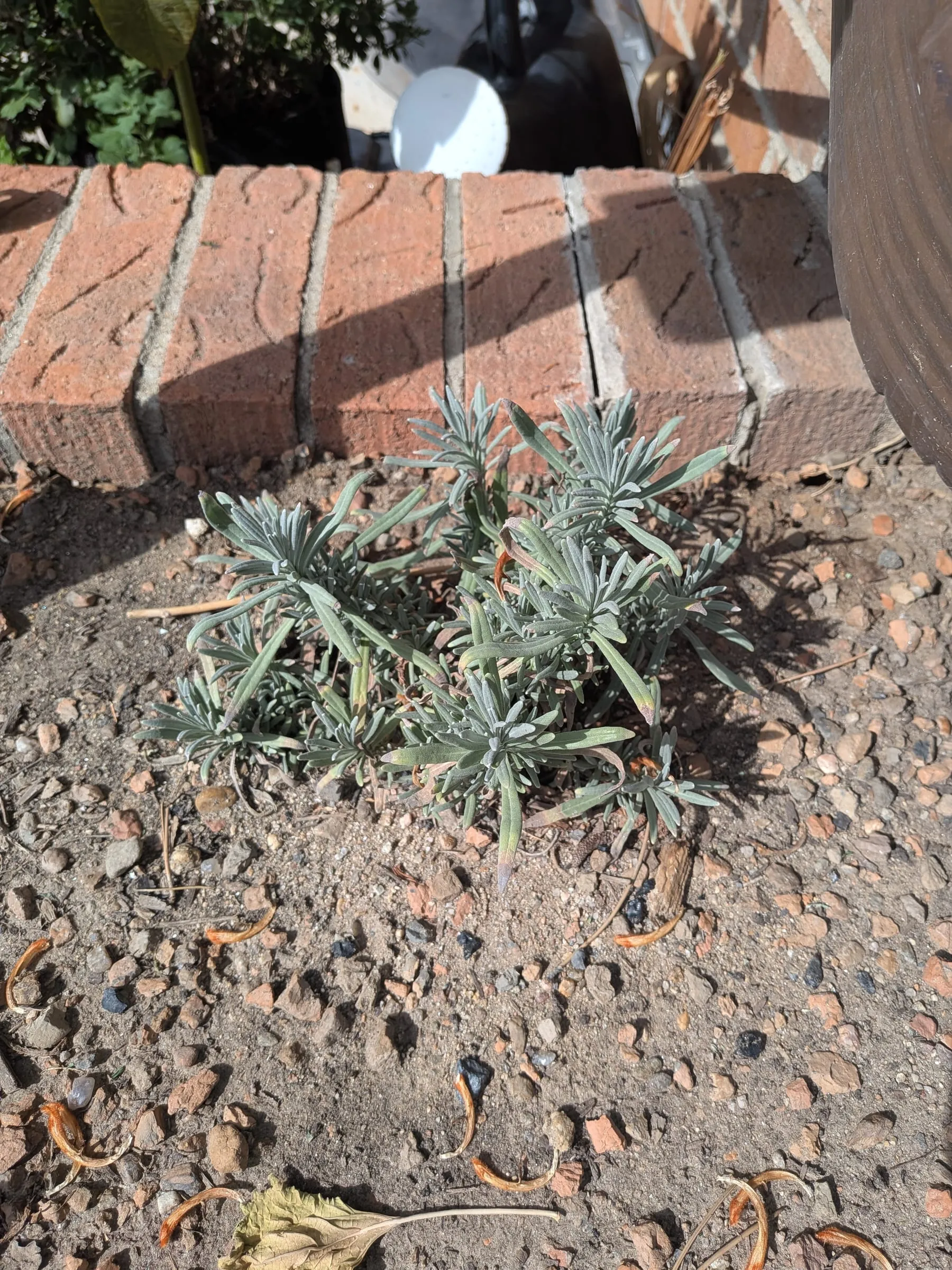
September
Silver squill — Ledebouria socialis
An indoor plant, originally a gift from a neighbour, put outside as an experiment. There is not much to say about a tender perennial treated as an annual, except that it did exceptionally well in the heat and the dry. It even flowered, which I have never seen in the many years I have grown it indoors, and it developed a deep green colour much richer than the indoor-grown plant.
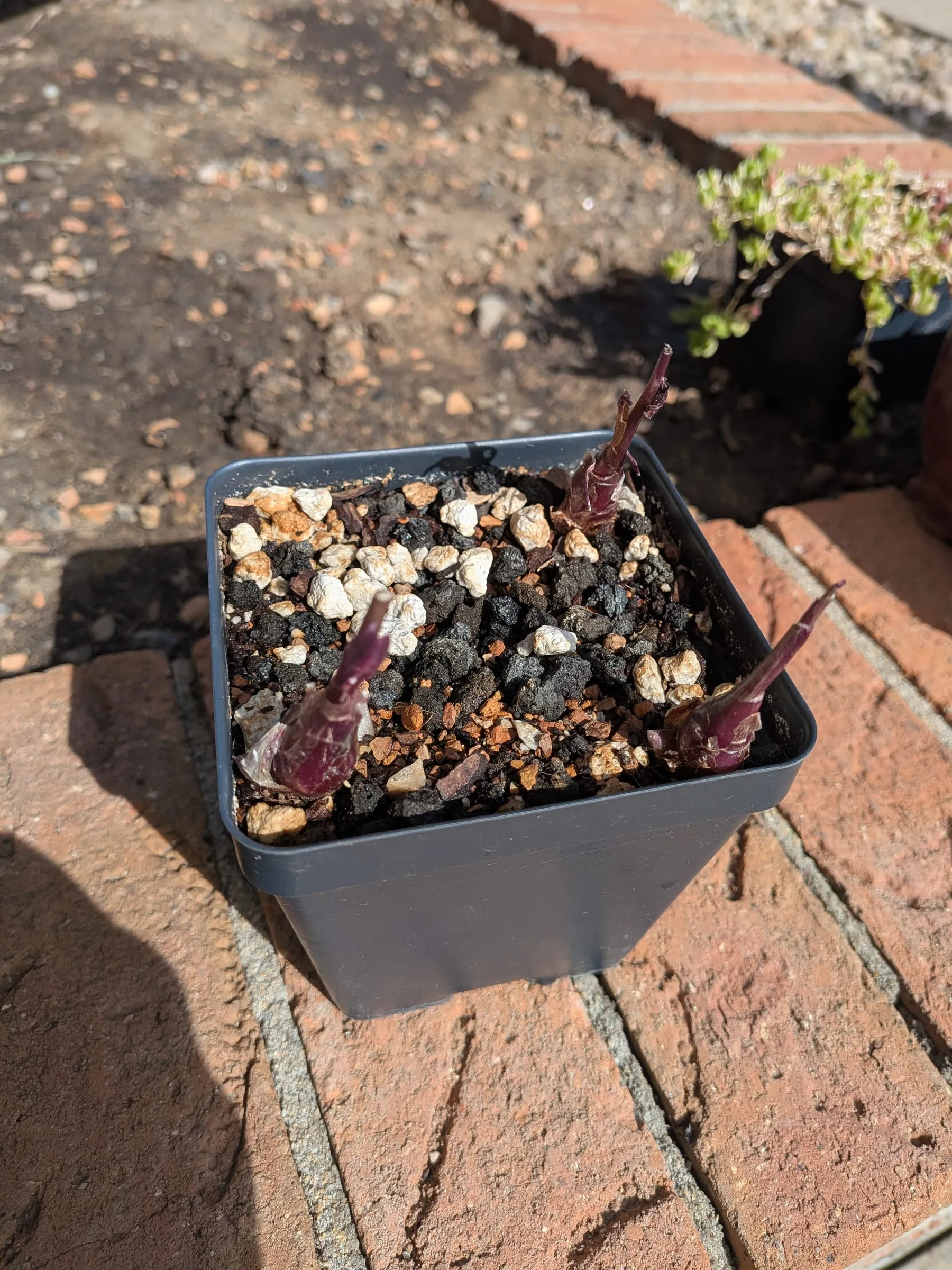
April
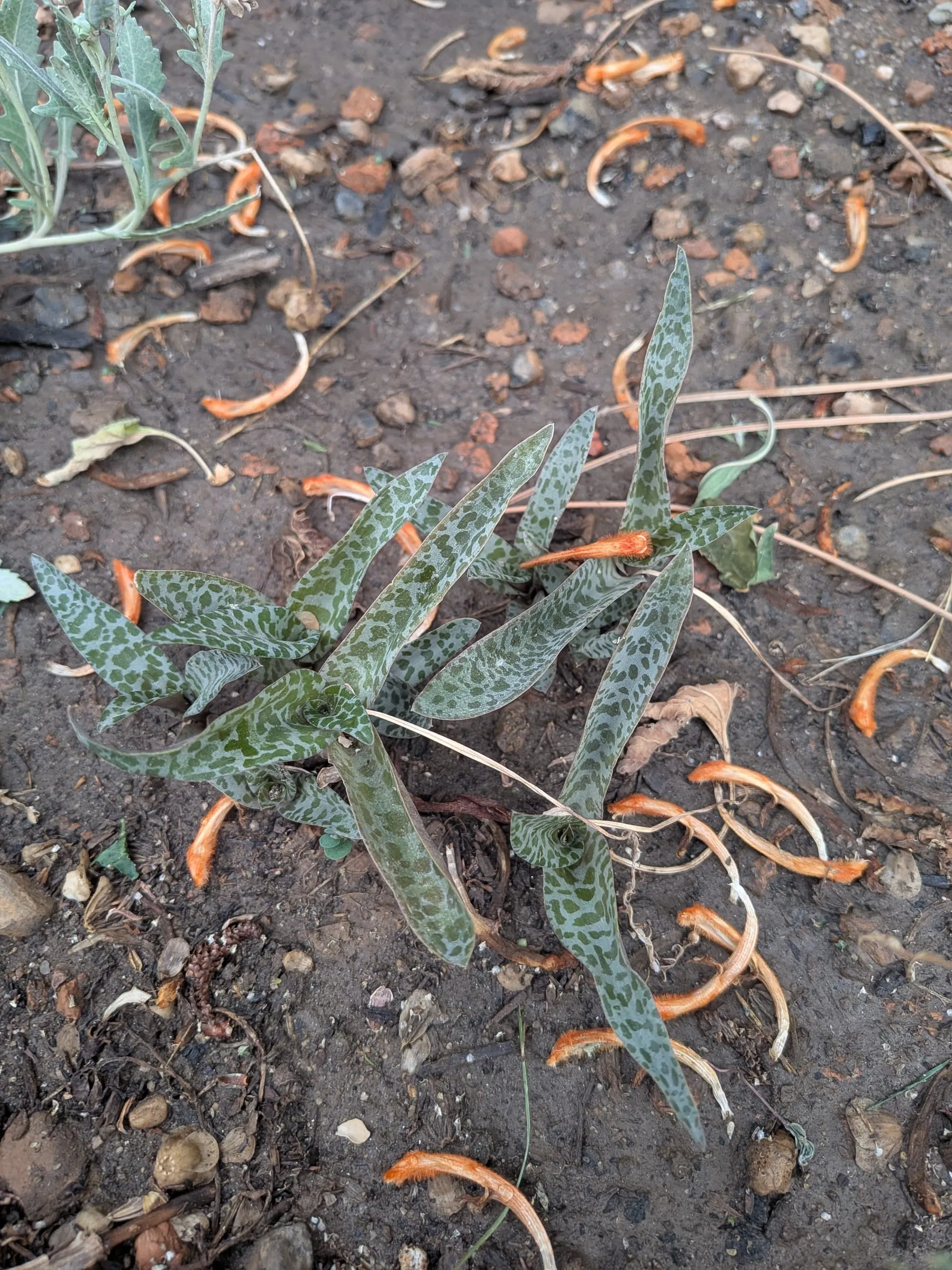
September — much darker than it ever was indoors
Blue flax — Linum lewisii
Local native nursery. Grew quickly at the start, with fairly small flowers, then collapsed and stayed relatively dormant for much of the season. It has recently started putting up small, upright, bristly stems and looks healthy and happy. Another one to watch next year.
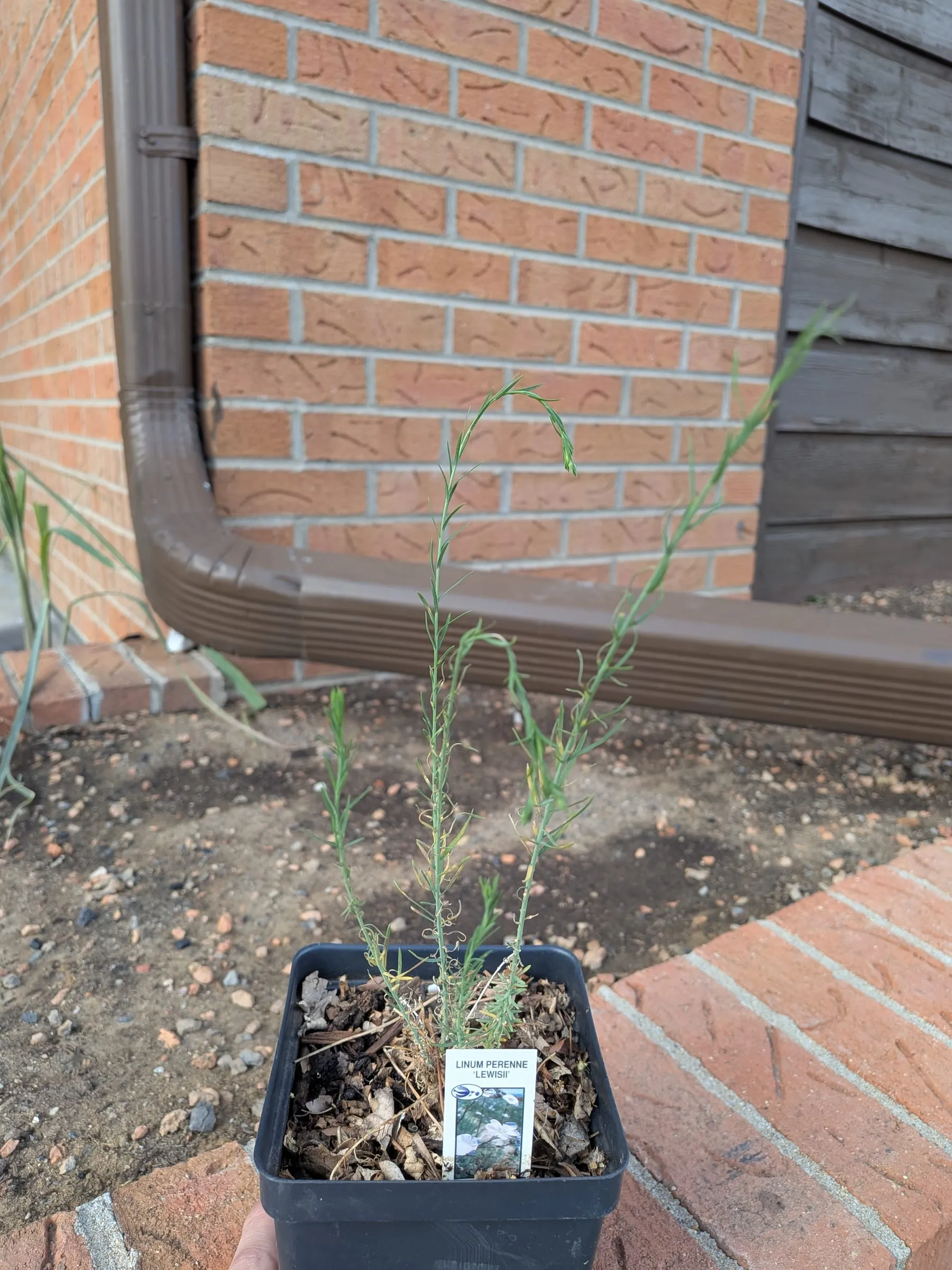
April
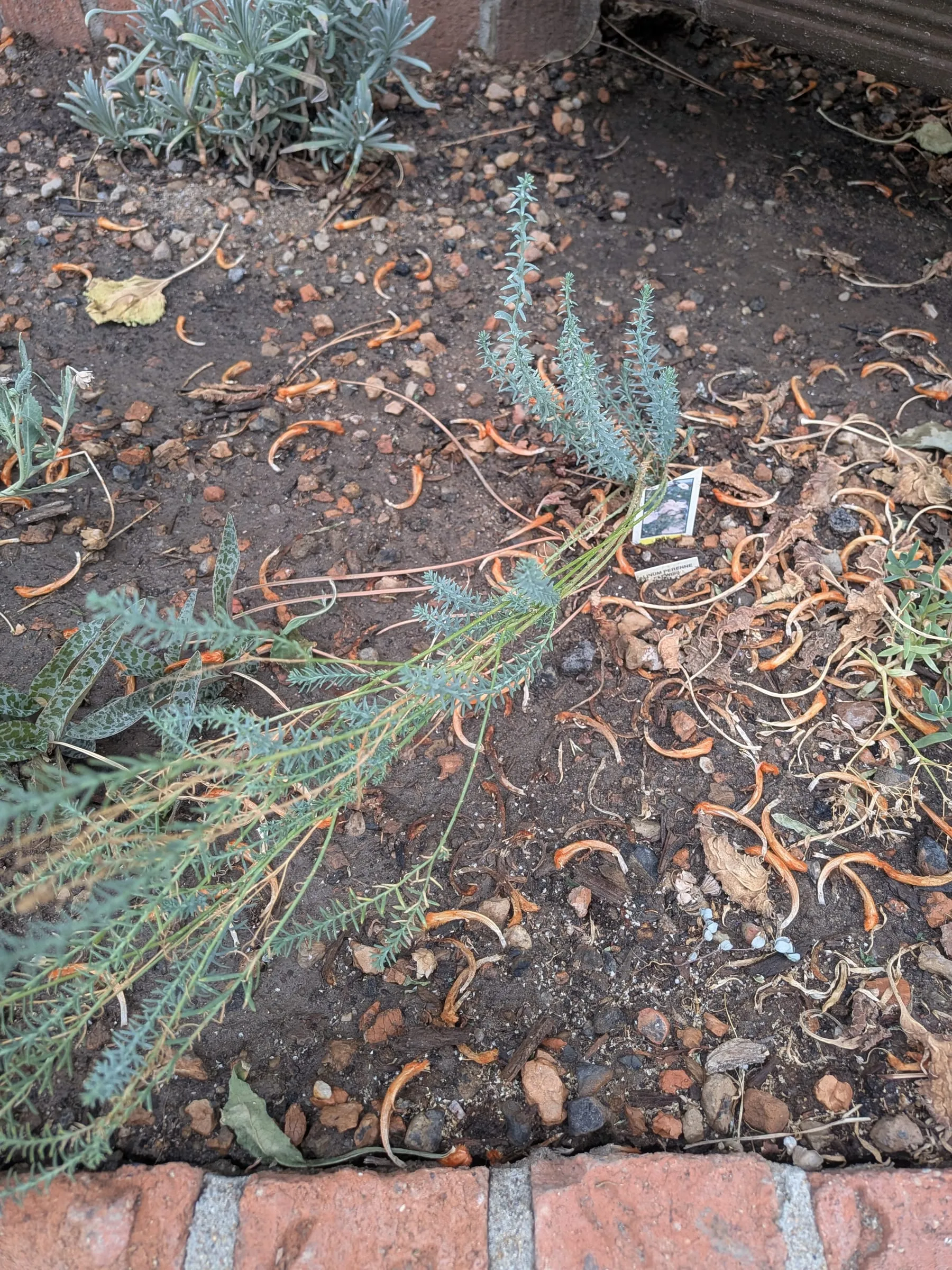
September, back from a long dormancy
Anise hyssop #1
From seed. A slow start, and constantly eaten by earwigs early in the season. It barely flowered and looked haggard late on, but it is still there. Expecting a strong return next season.
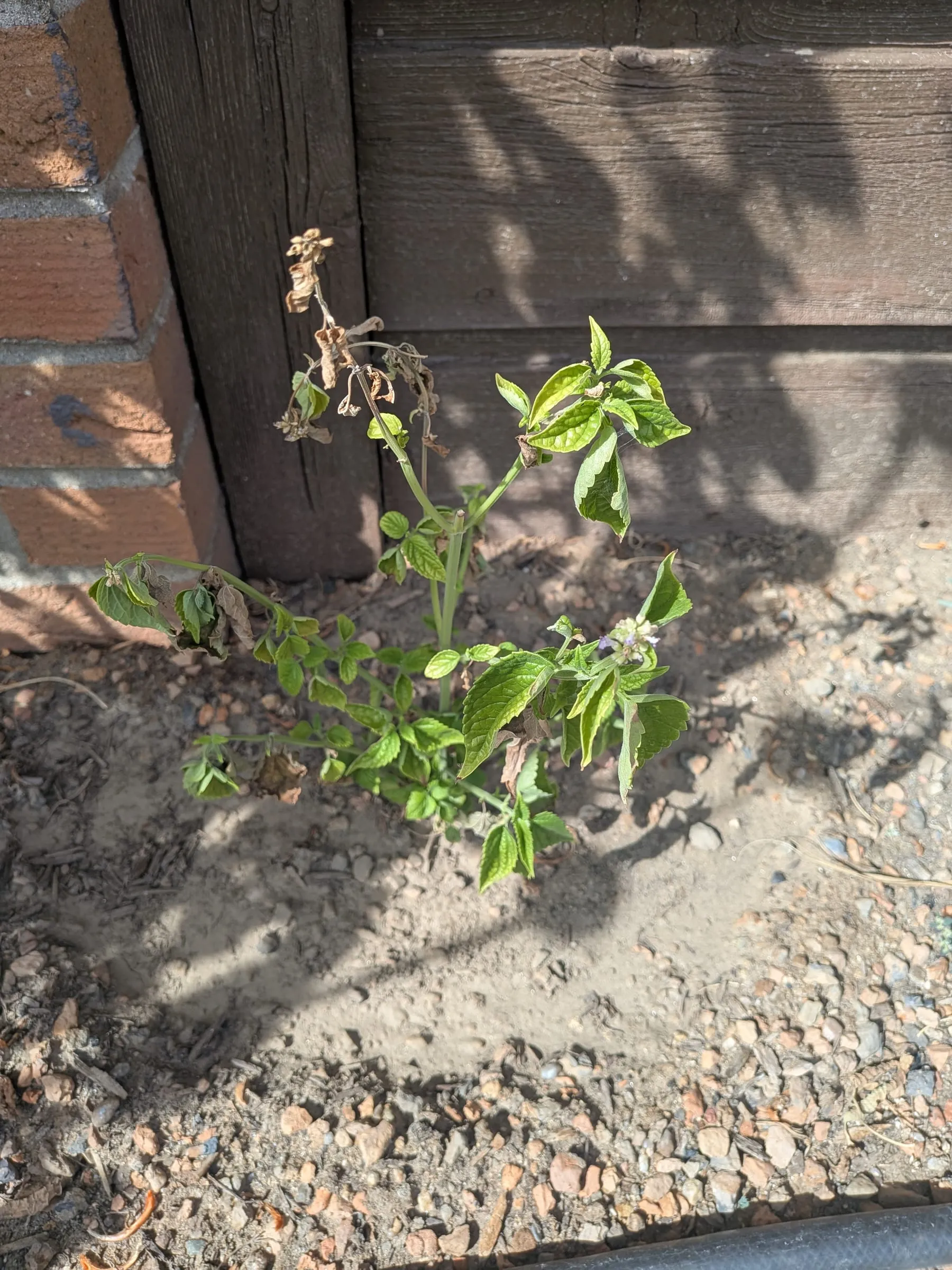
September
Thyme — Thymus vulgaris
A plug from a local nursery, started indoors and moved outside early in the season. It has not handled the transition well. I am not sure whether that is underwatering, too much heat, or a combination, and I do not know whether it will overwinter here. Experimental.
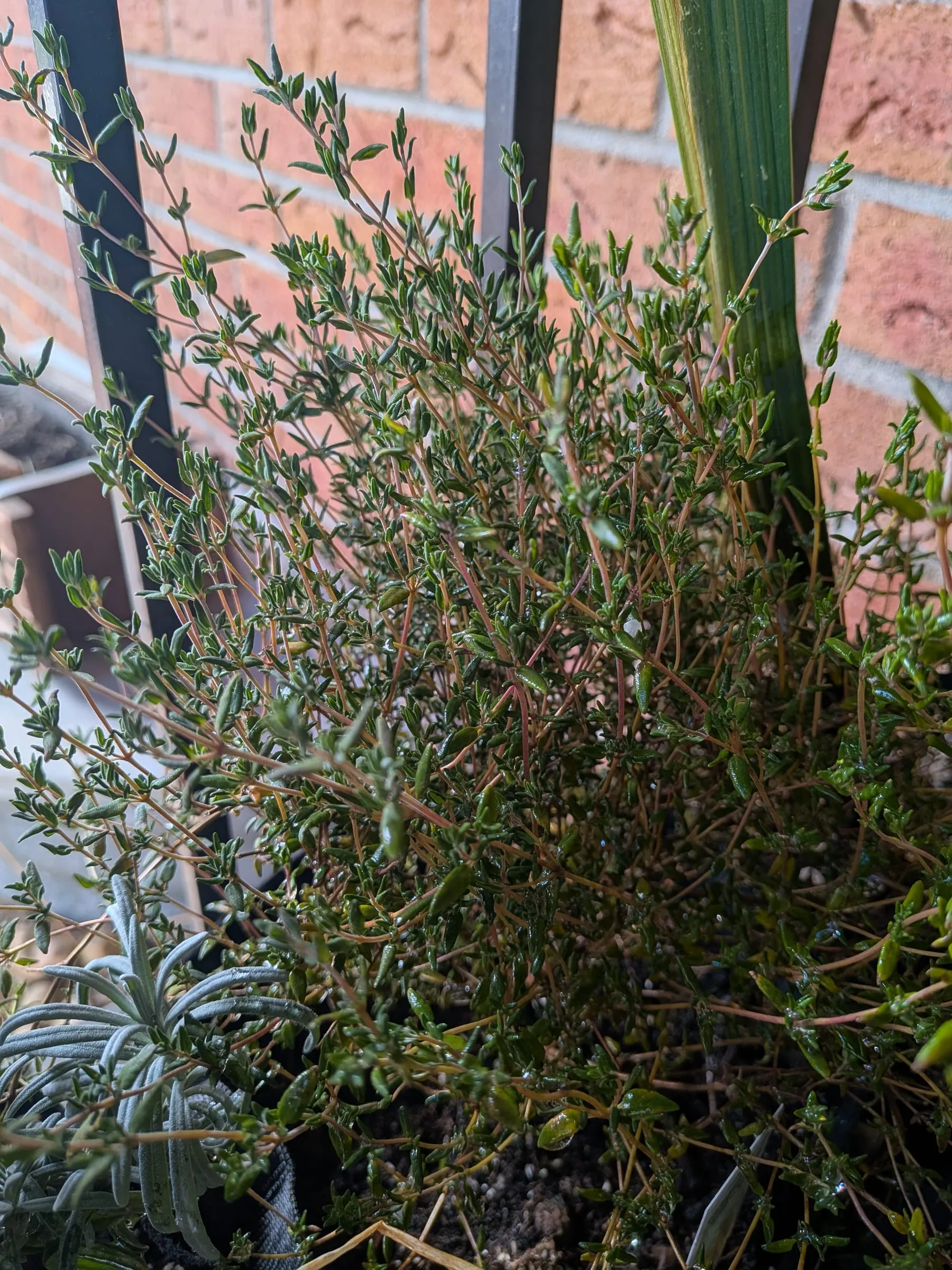
April
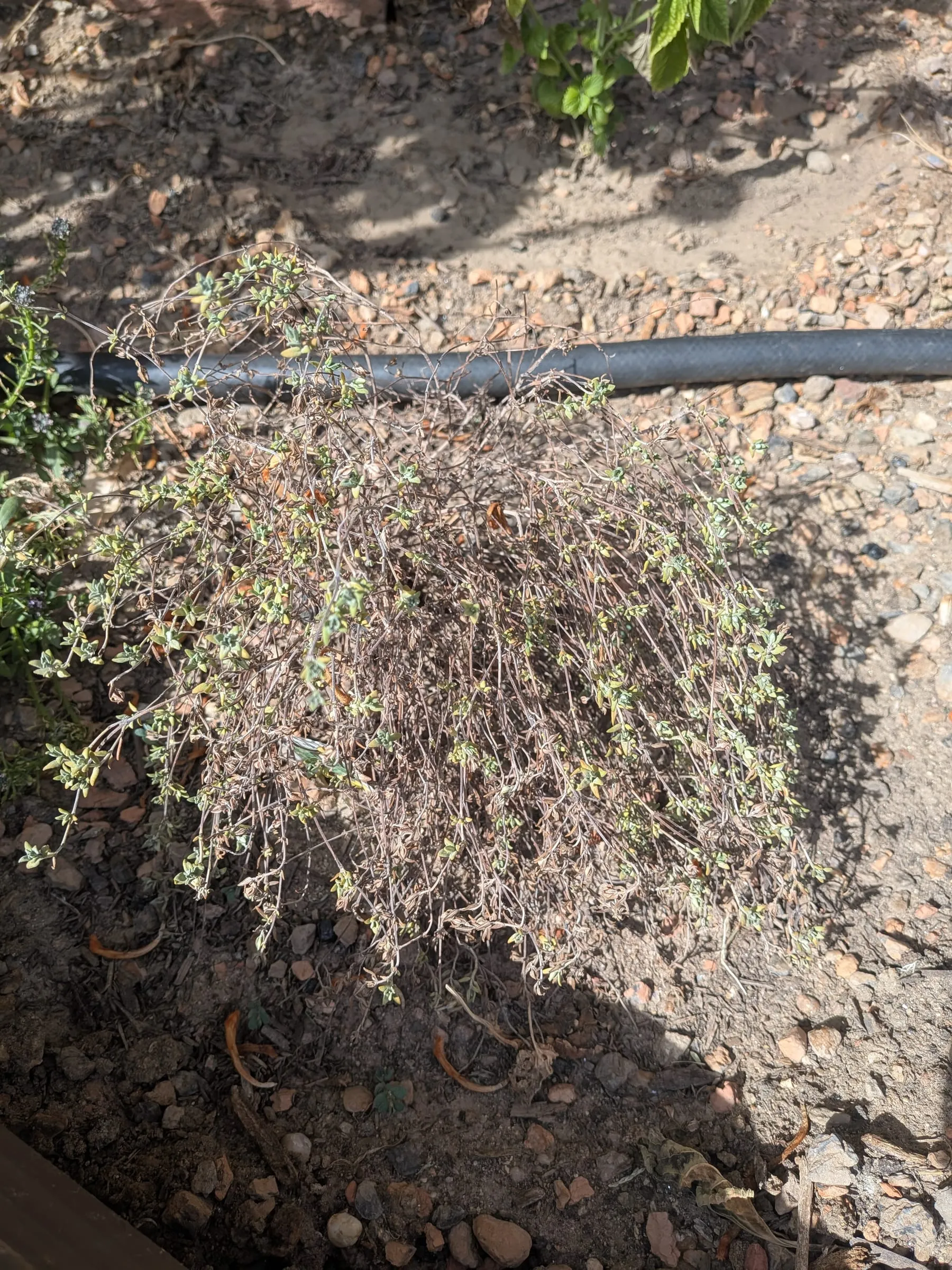
September
Lavender #2, species unknown
A cutting from a relative’s outdoor garden, rooted in perlite indoors, so it should at least be cold hardy. It did OK — not a lot of growth, and no flowers, which is normal for a first season. No burning either, and it stayed drought tolerant and heat tolerant without leaning away from the building. For year one that is roughly what success looks like.
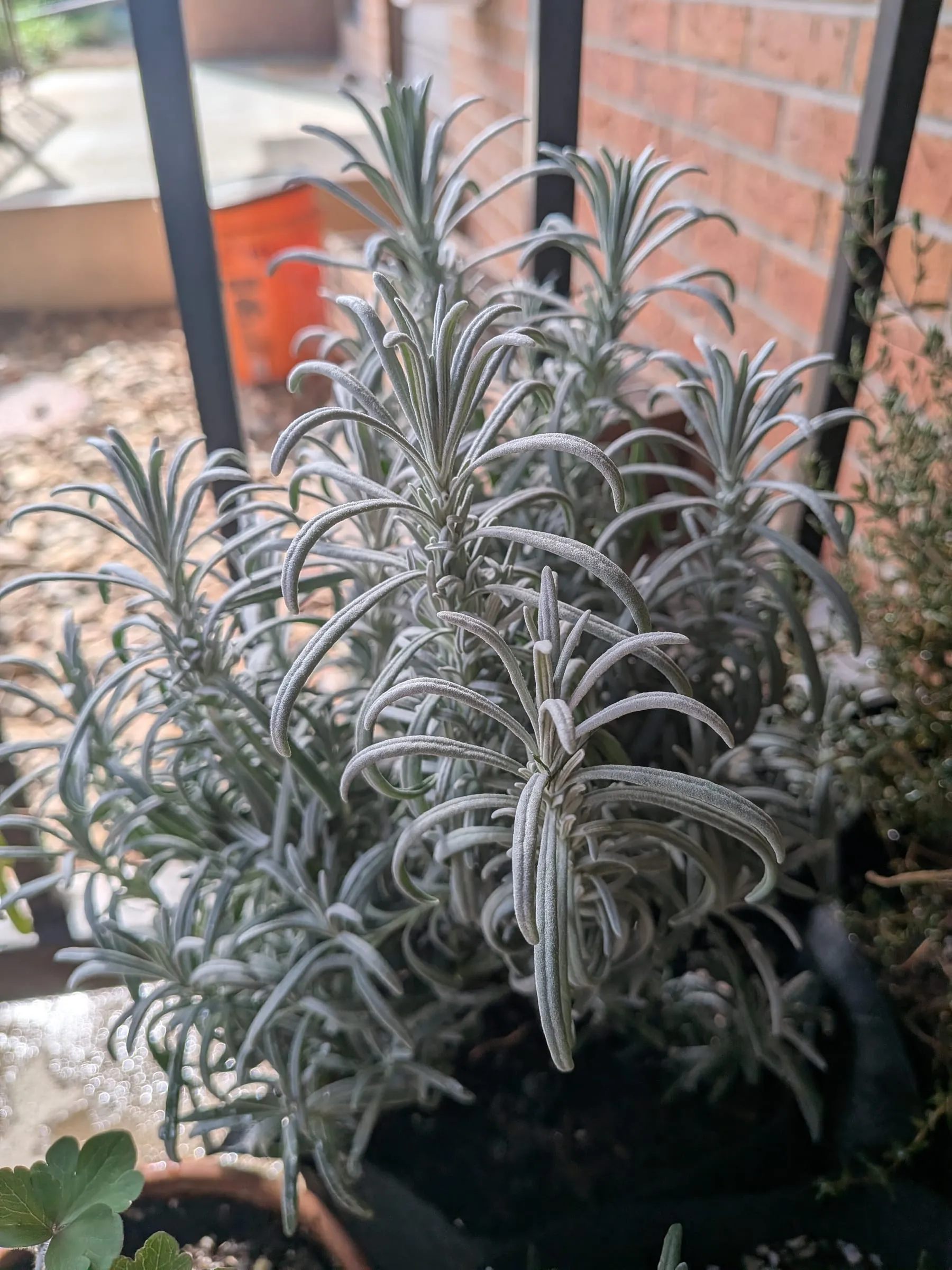
April
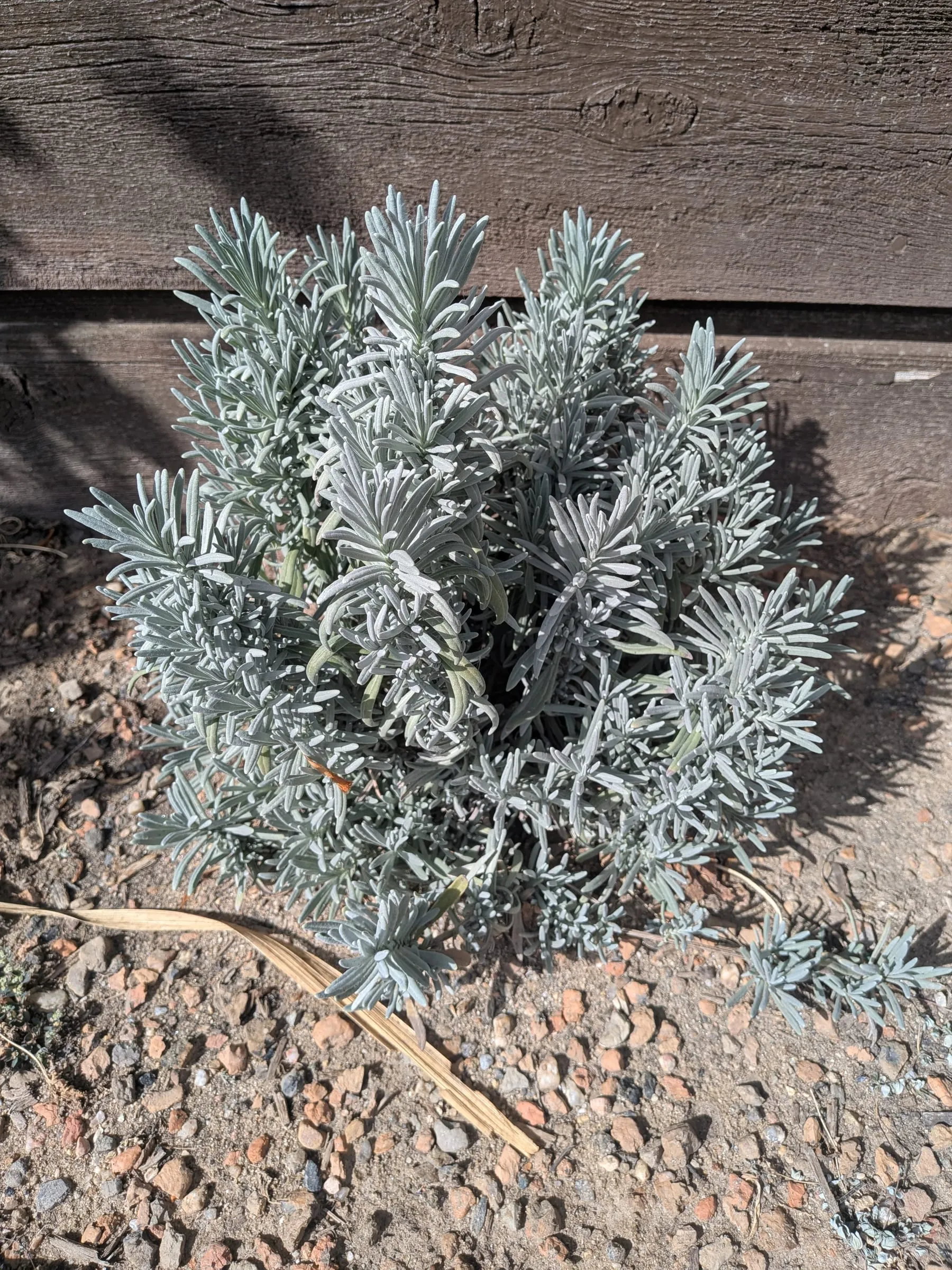
September
Roadside iceplant or sedum #1
A small cutting taken from the side of the road. No sign of water or heat stress at any point, but it has grown slowly. Expecting it to do well next year.
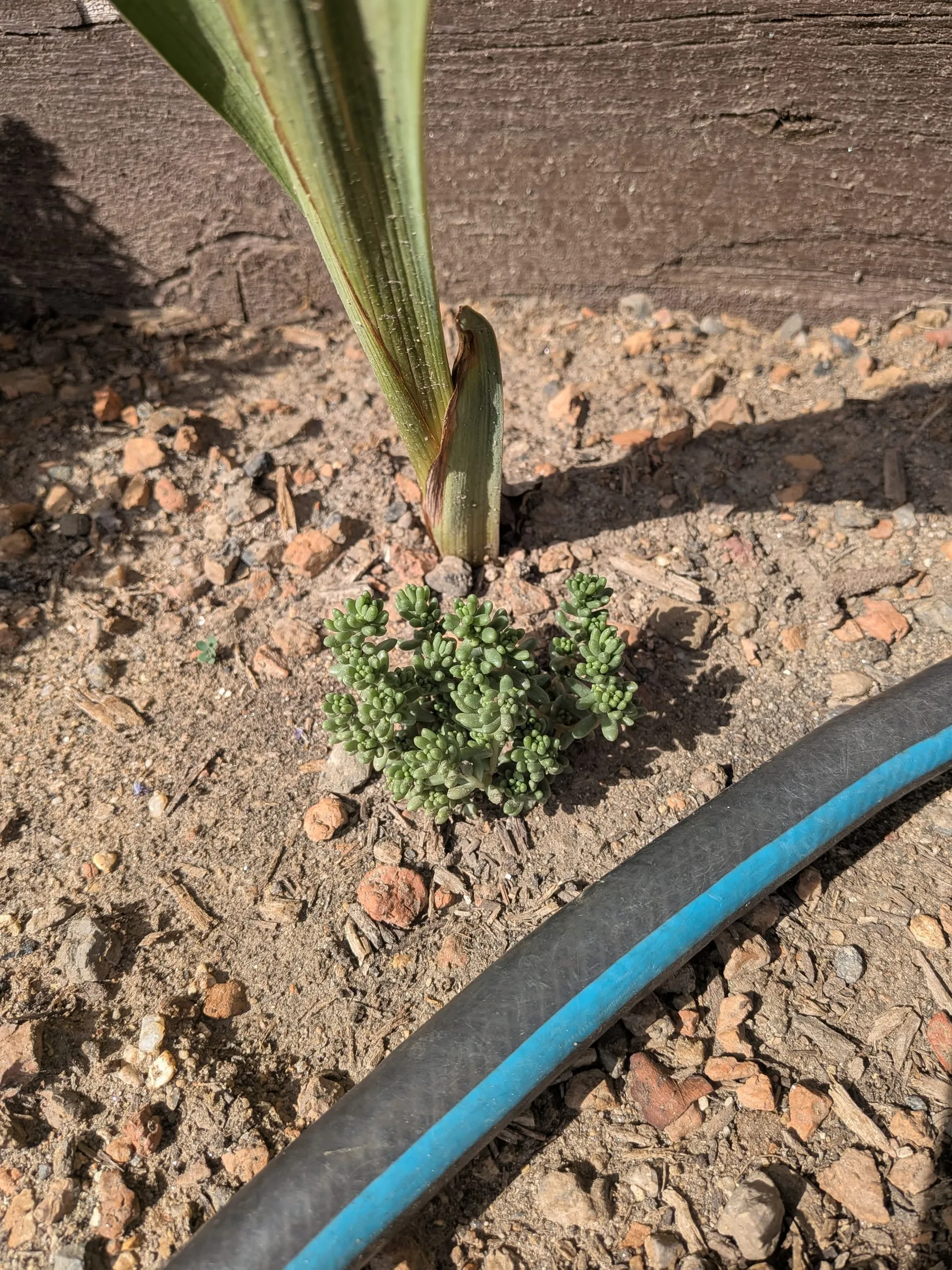
September
Gladiolus
Dug out of this bed last year on move-in to protect the corm from frost, then replanted early this season. Tolerant of the heat and the drought, but it bloomed quickly and poorly in the harsh conditions. I am leaving the corm buried this time. I expect it to die over winter, though next to a warm house it may survive. Not well suited to this environment.
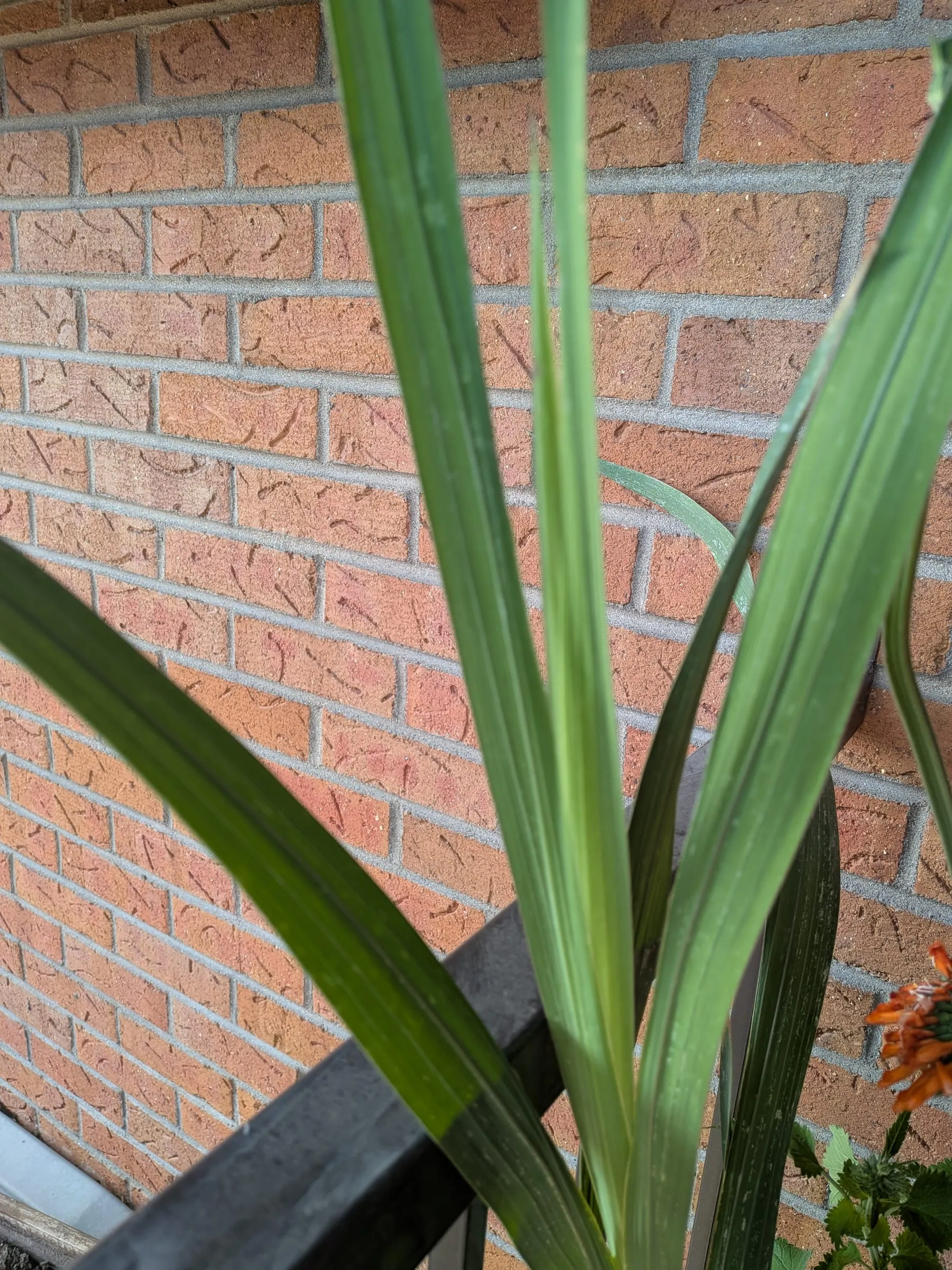
April
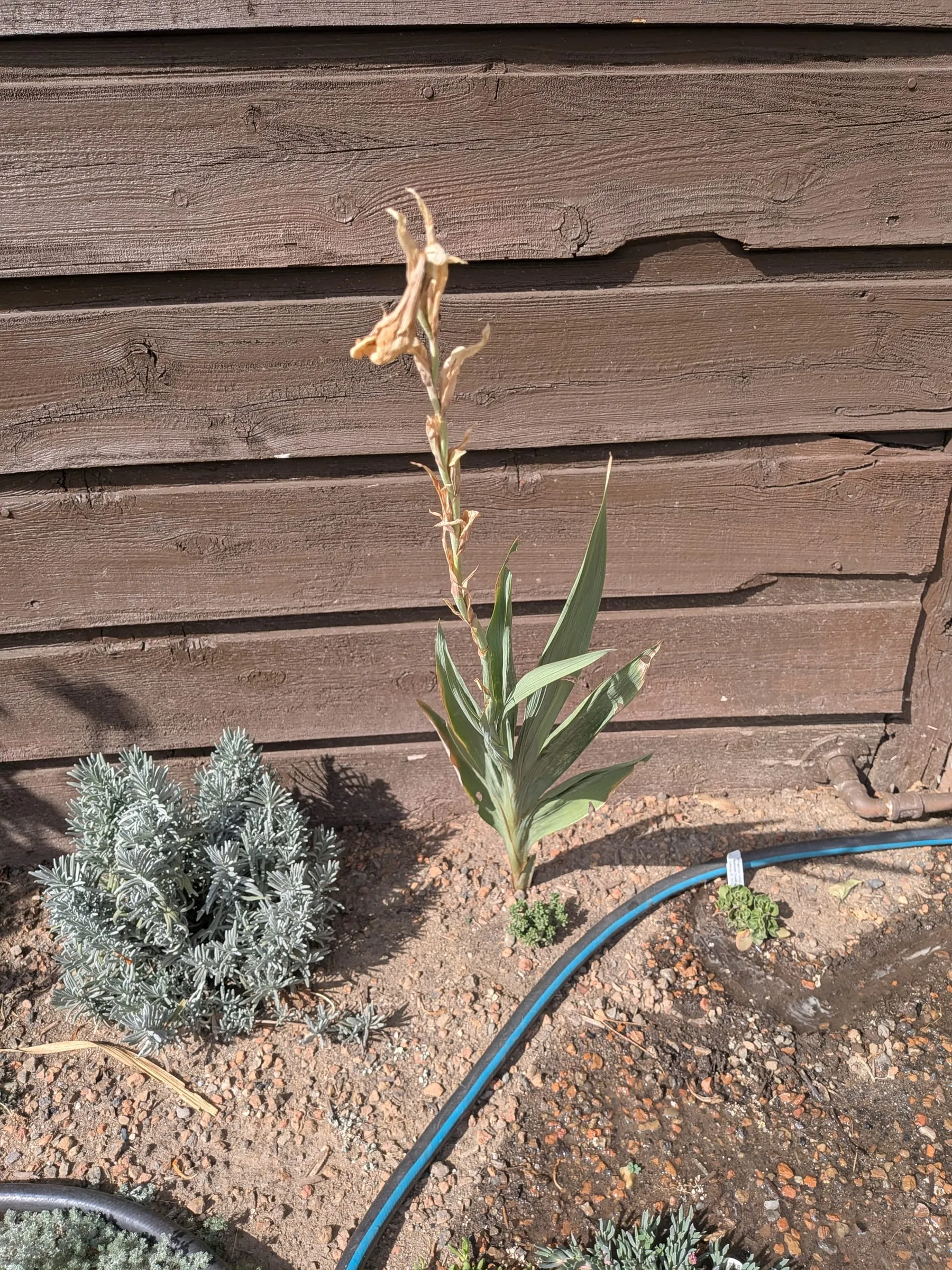
September
Kannah Creek sulphur buckwheat — Eriogonum umbellatum var. aureum
Local native nursery. It has done nothing all season. It looked stressed at first and dropped leaves, but it established fine and finished the season healthy and turgid. I cut its striking yellow flower off as the stress appeared, to reduce the metabolic and water demand. Expecting a much better display next year.
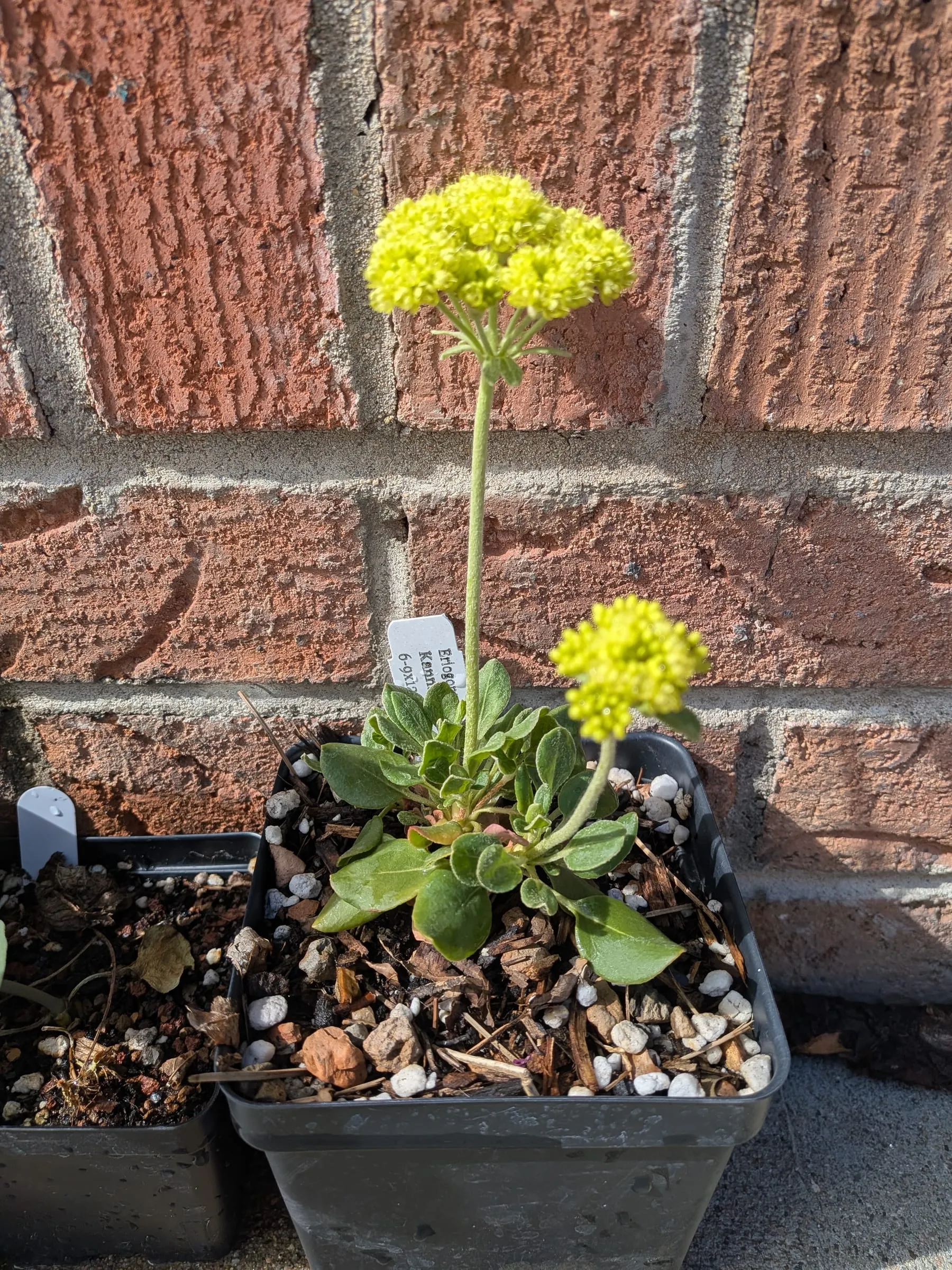
April, with the flower I later cut off
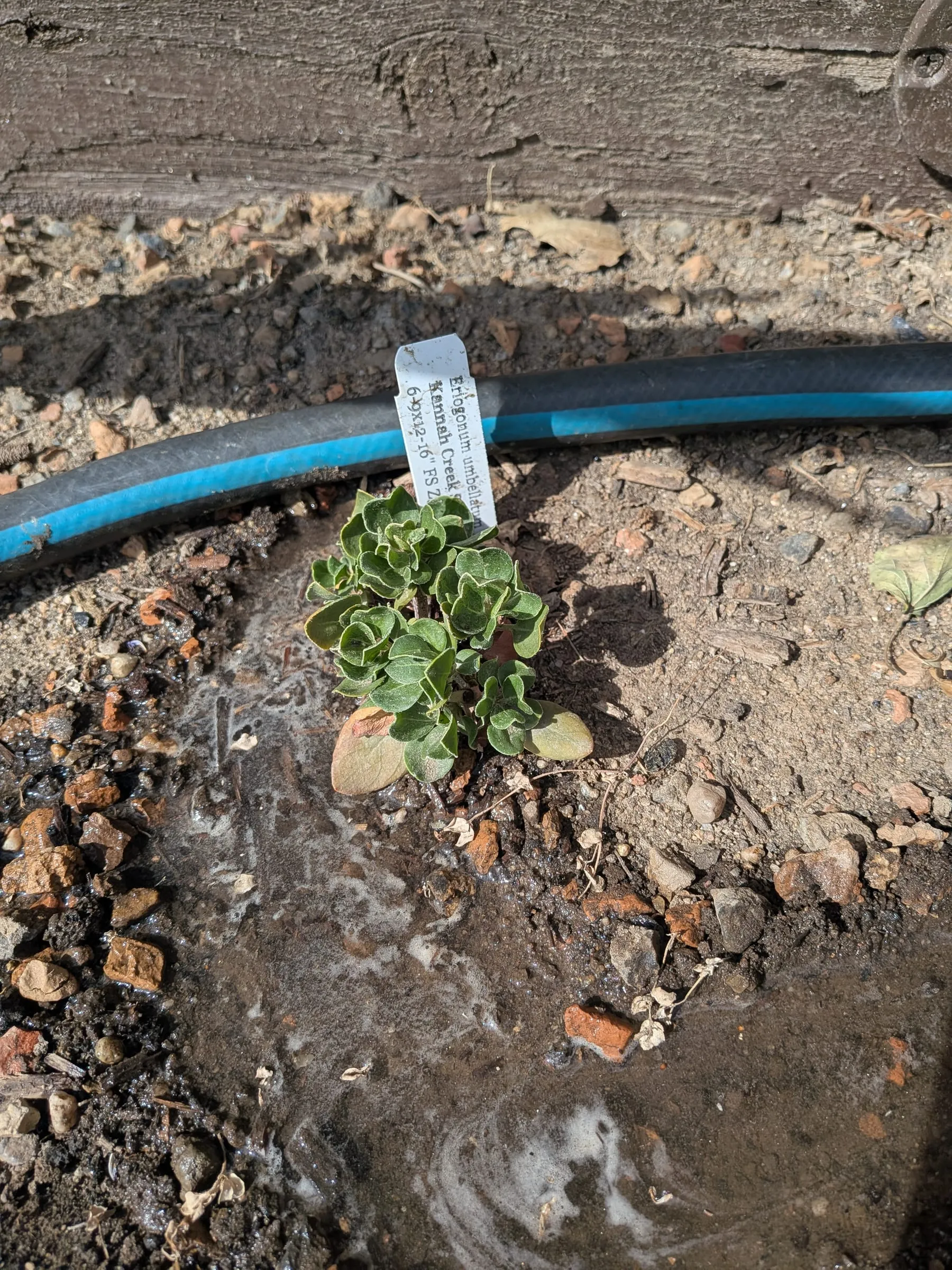
September — healthy, and no bigger
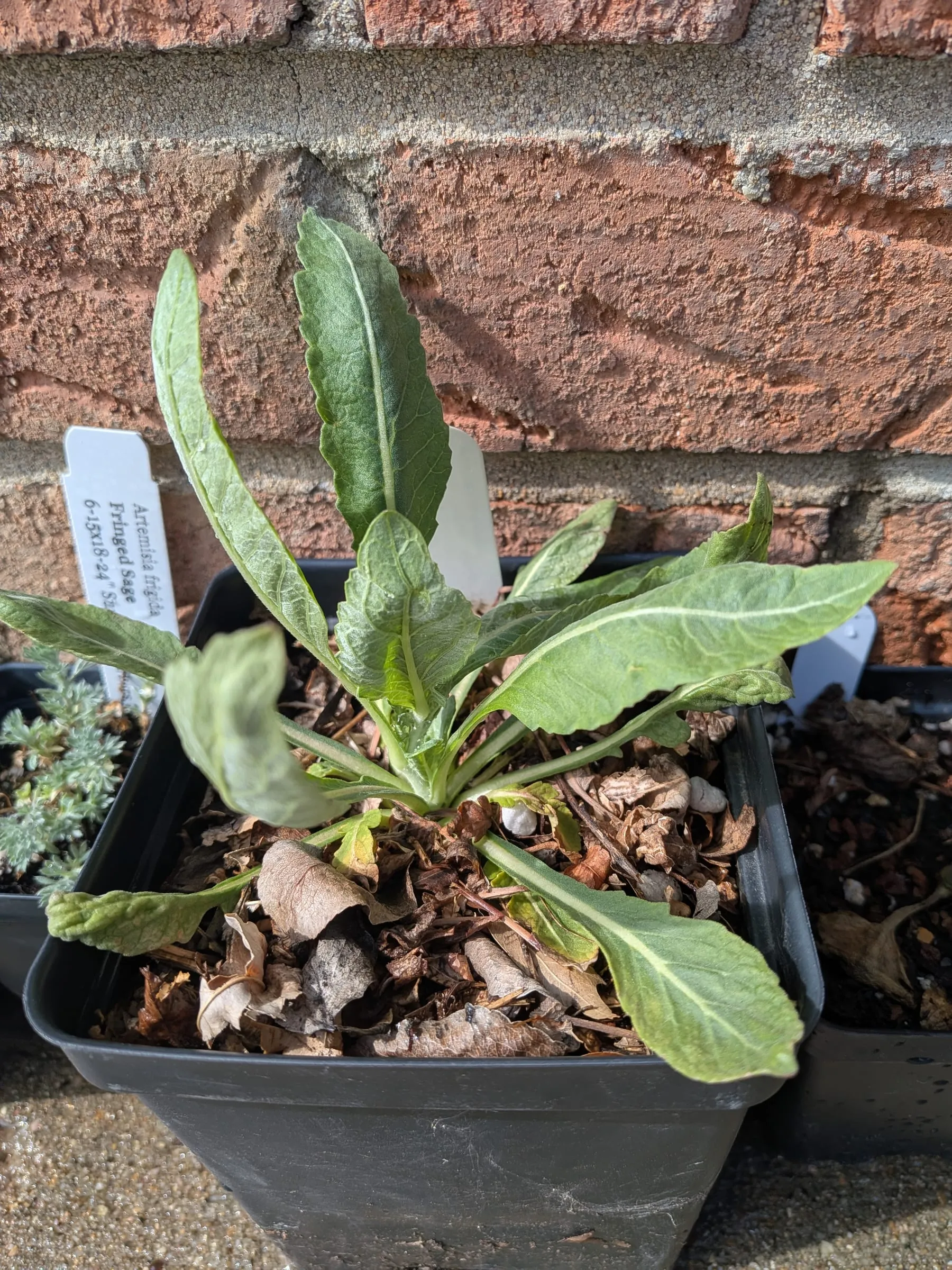
Fringed sage — Artemisia frigida
Local native nursery. Did amazing. Once it established it grew rapidly, expanding an order of magnitude or two from its April size. A definite winner for ground cover, though no blooms. Maybe next year.
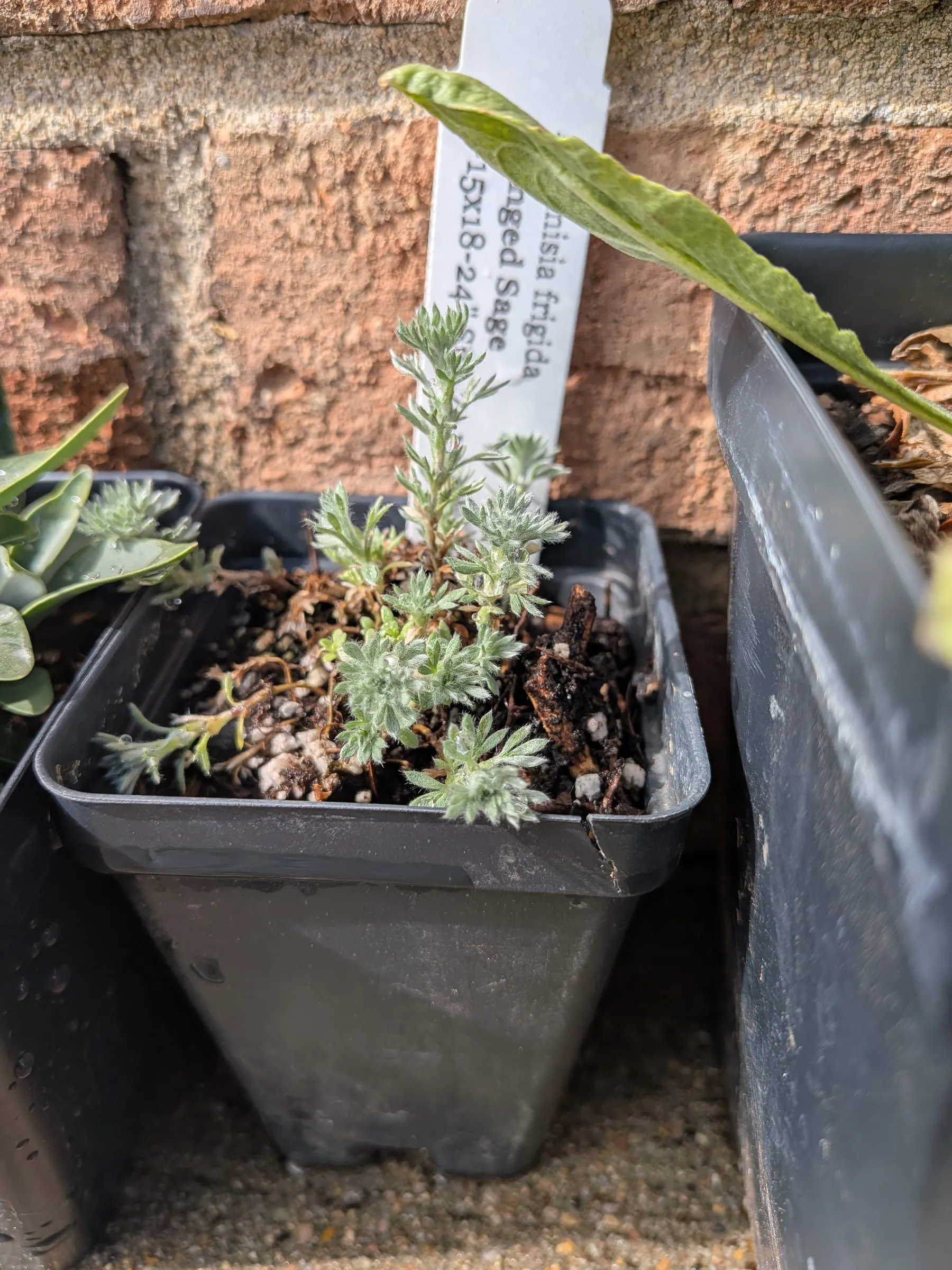
April
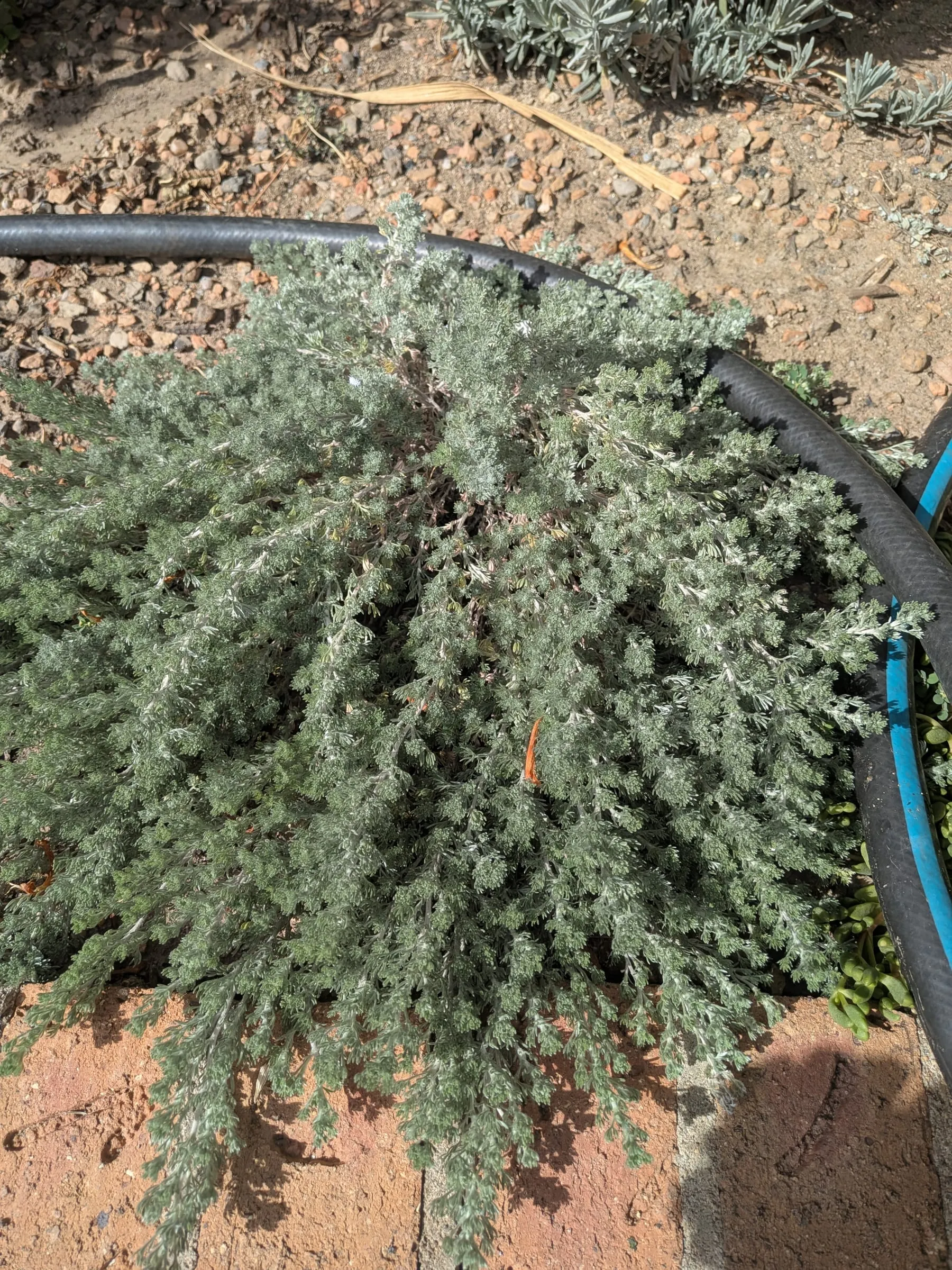
September — the same plant
Roadside iceplant #2
Also found on the side of the road, and labelled Sedum album in my notes, which is incorrect. Mixed results. One patch near the far end of the bed grew rapidly and then cratered, dying completely from the centre out — neither more water nor less broke the cycle. A small cutting replanted at the opposite end has taken off, filling out into a rich green succulent patch pushing up against the artemisia and the ruschia.
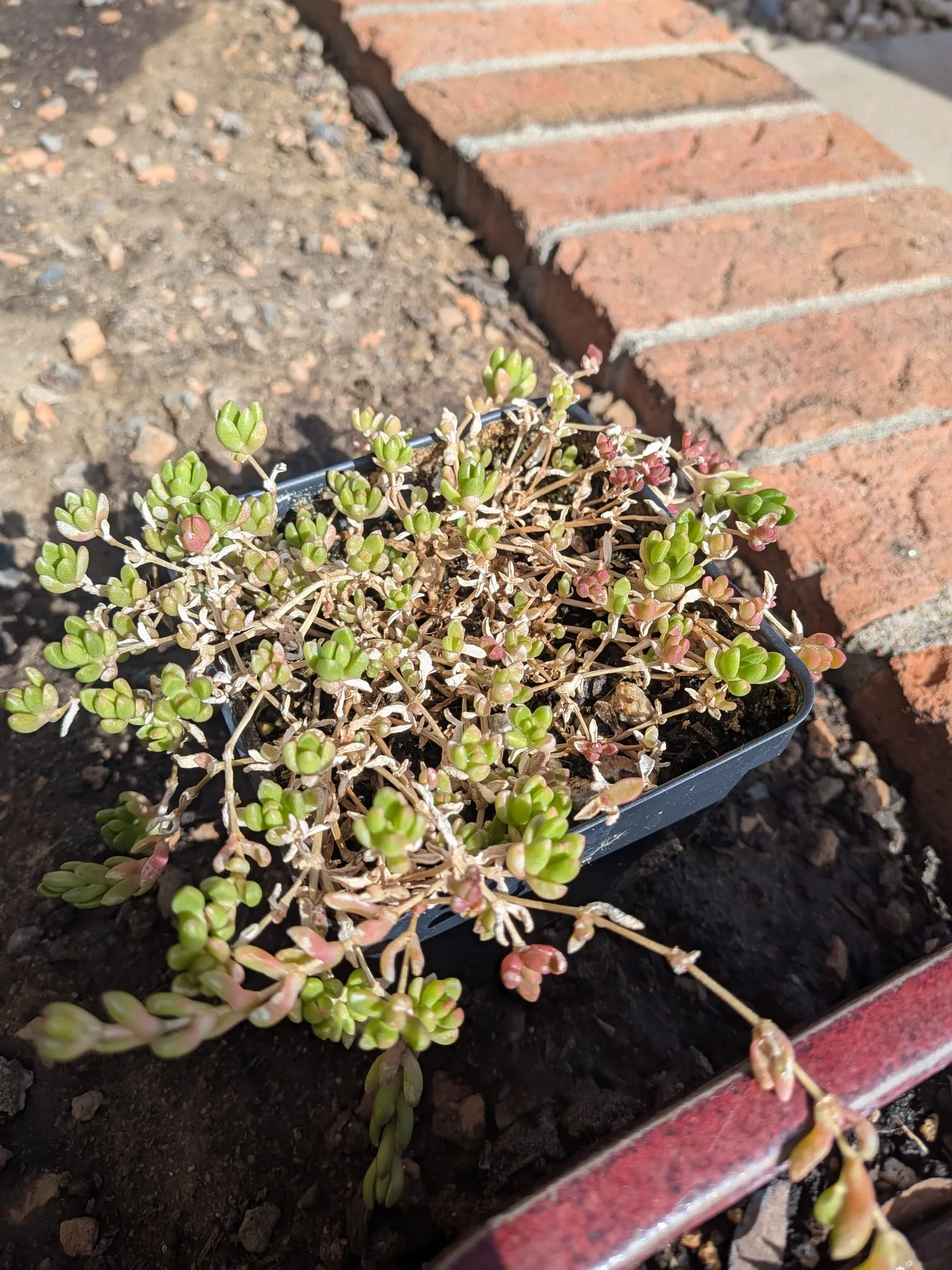
April
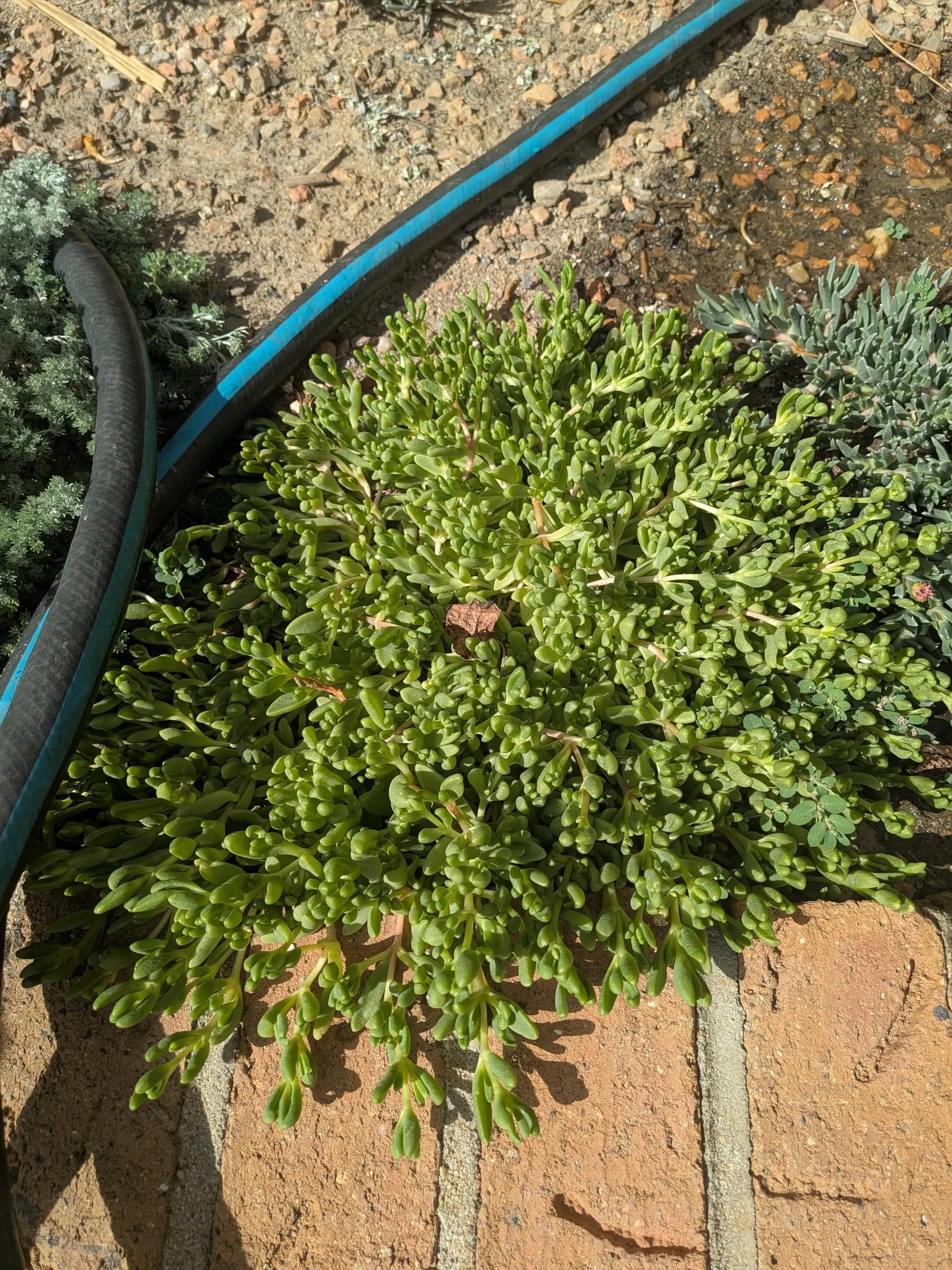
September — the cutting that took, not the patch that died
Creeping shrubby iceplant — Ruschia pulvinaris
Local native nursery. Slow growing but a steady creeper. A sharp, angular, tough-looking plant with striking purple flowers. Seemingly less drought tolerant than the rest — it loses turgidity and stops flowering when it is dry — but it survived the summer on minimal water. Hoping for more vigour next year.
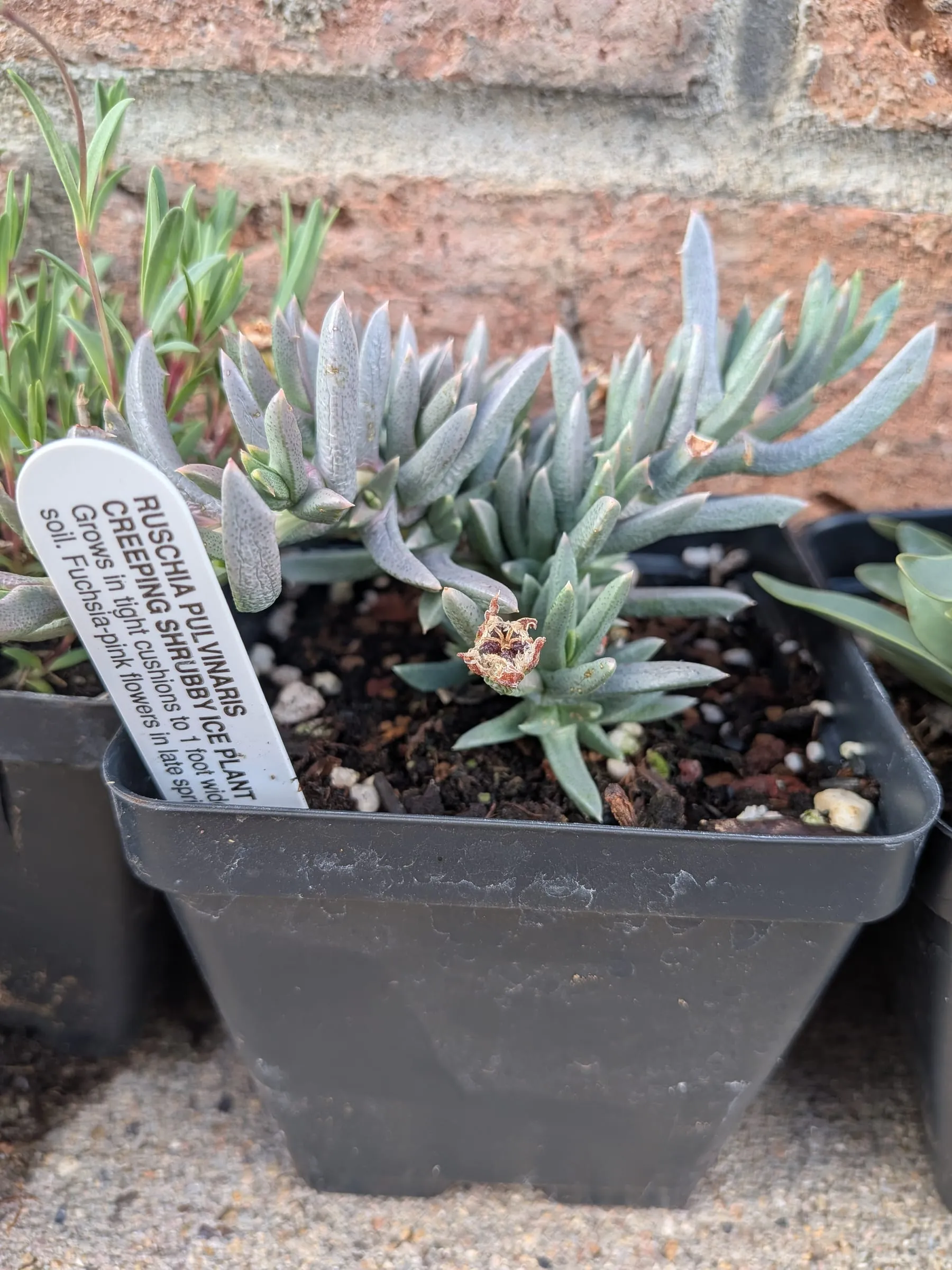
April
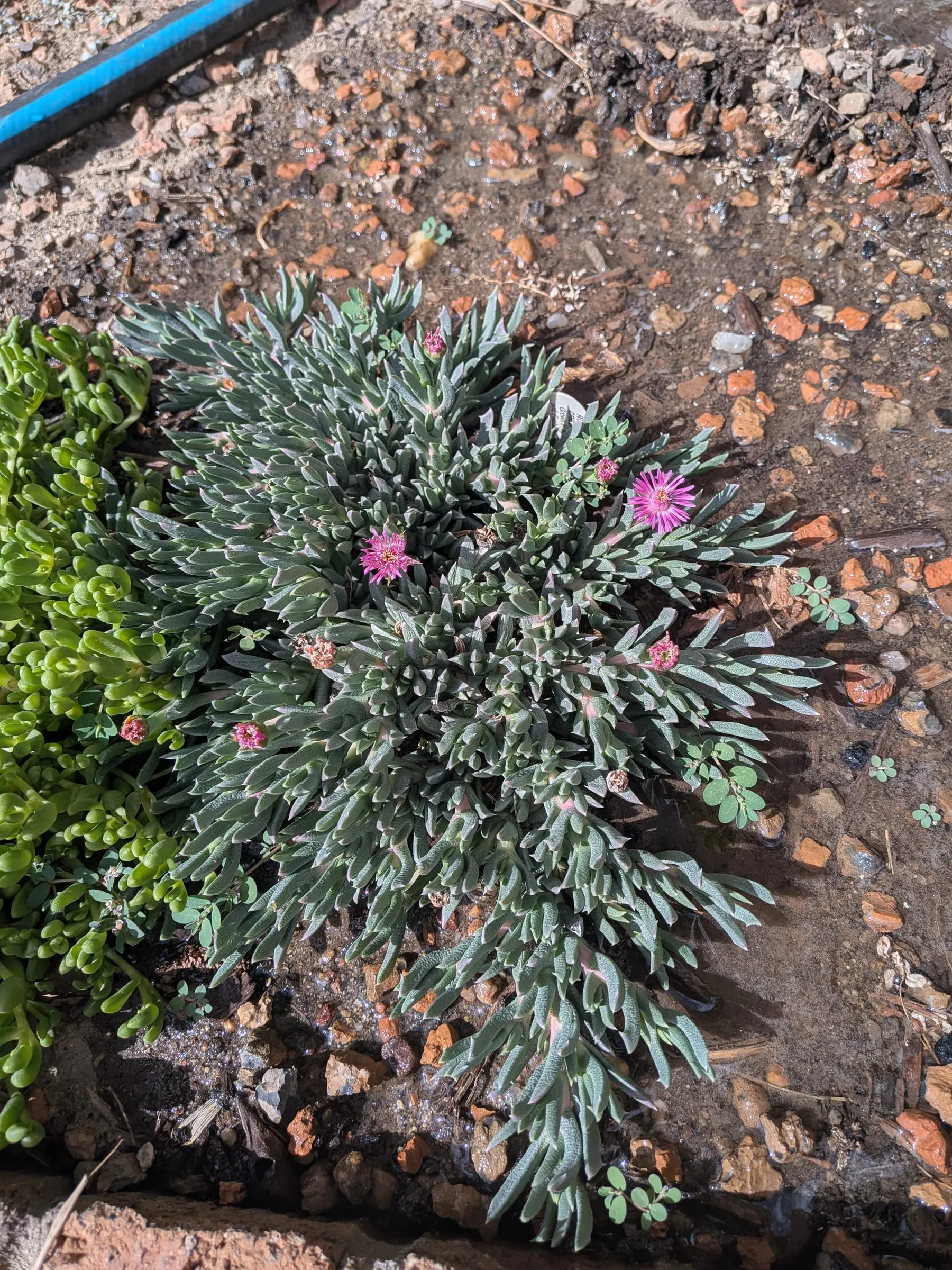
September
Anise hyssop #2
From seed indoors, and transplanted as a small plant whose roots I mangled trying to separate it from its brother. It took some shading and frequent watering, but it grew into a small-to-medium plant that put out many flowers. Extremely pollinator friendly, and it smells like licorice.
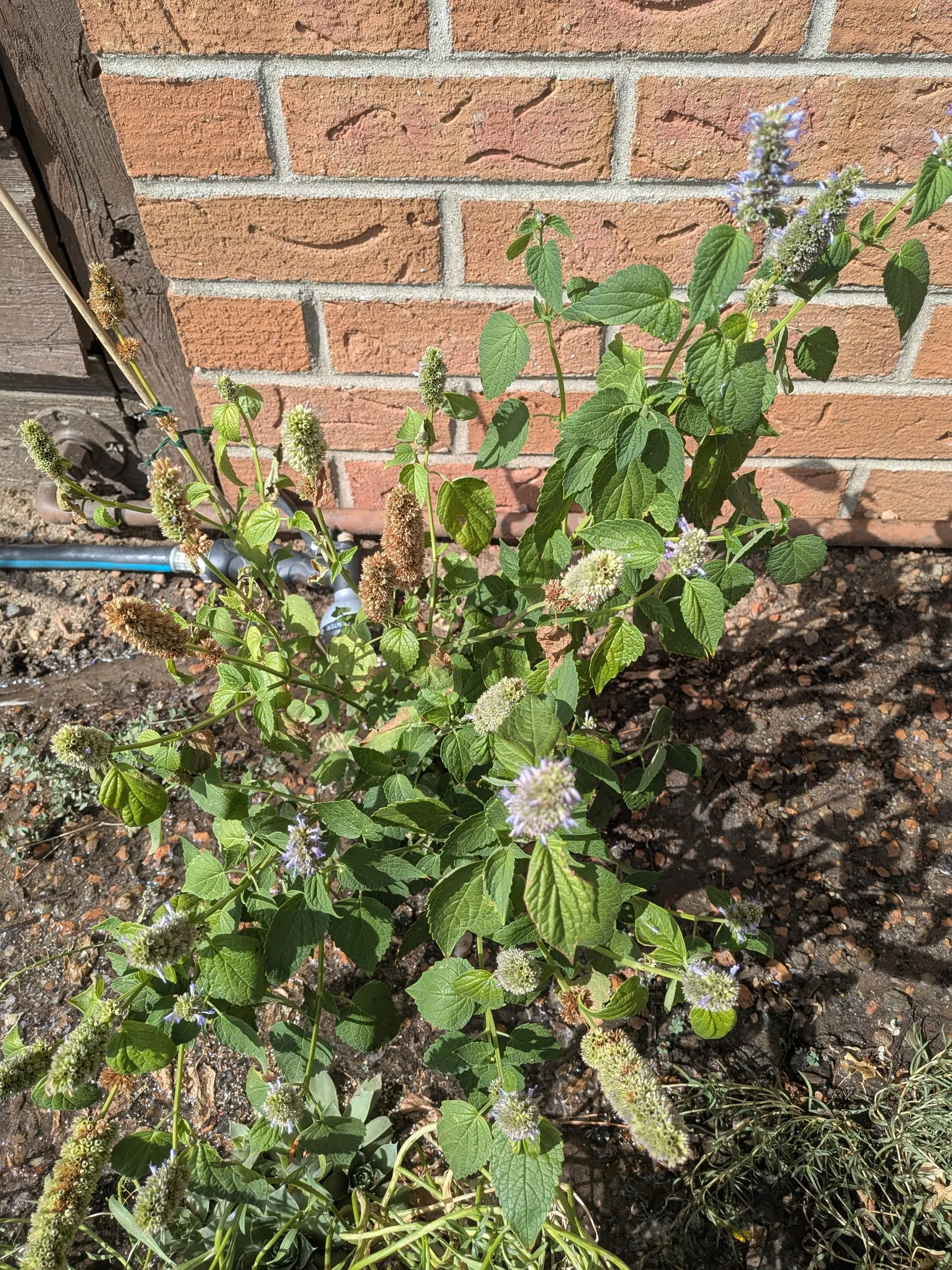
September — the one whose roots I mangled
Hen and chicks — Sempervivum spp.
Found on the side of the road. An alyssum happened to sprout right next to it, so it has been shaded and out of sight for much of the year. It went in stressed and looks happy and established now. It will be interesting to see what happens when the alyssum dies off and it gets full sun and heat again.
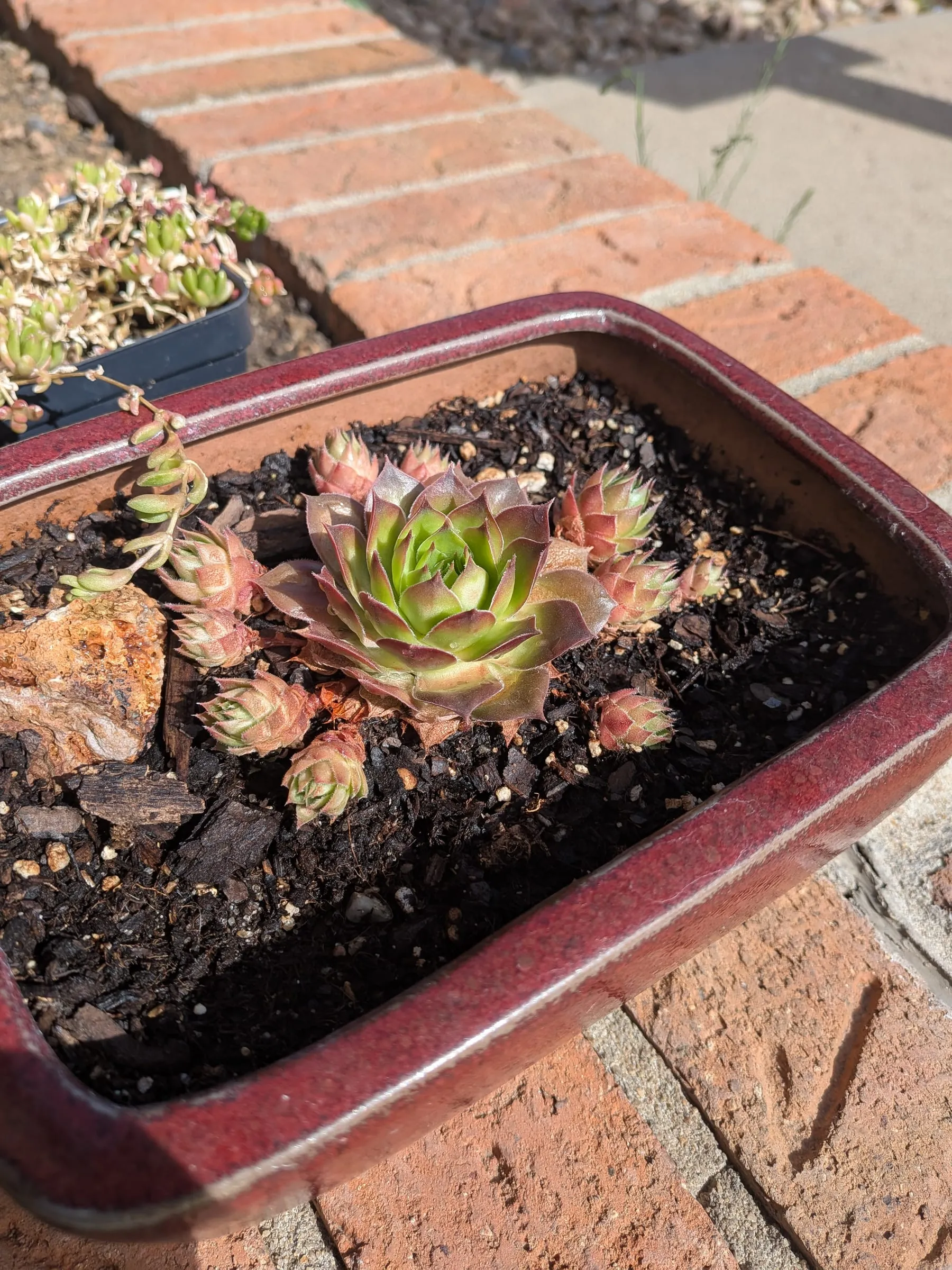
April
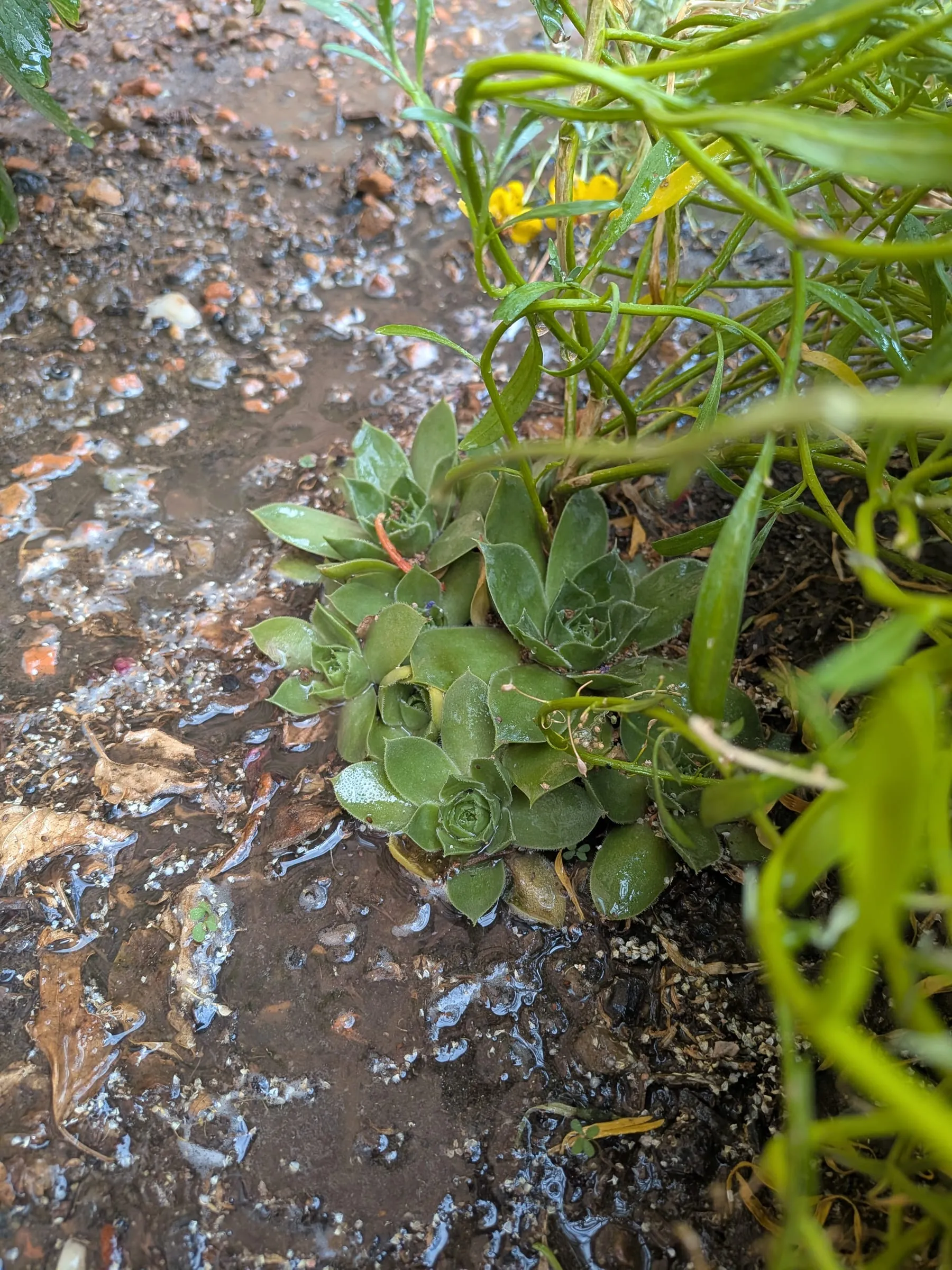
September, still under the alyssum
Alyssum
Hand-sprinkled into the bed as seed when I filled it. Half a dozen or so sprouted, with varying degrees of success. The one pictured is easily the most vigorous, sending out constant sweet-smelling blooms. Surprisingly drought tolerant — I knew they liked heat, but it kept pace with the xeric plants in the bed all season. An annual, so it dies with the first frost.
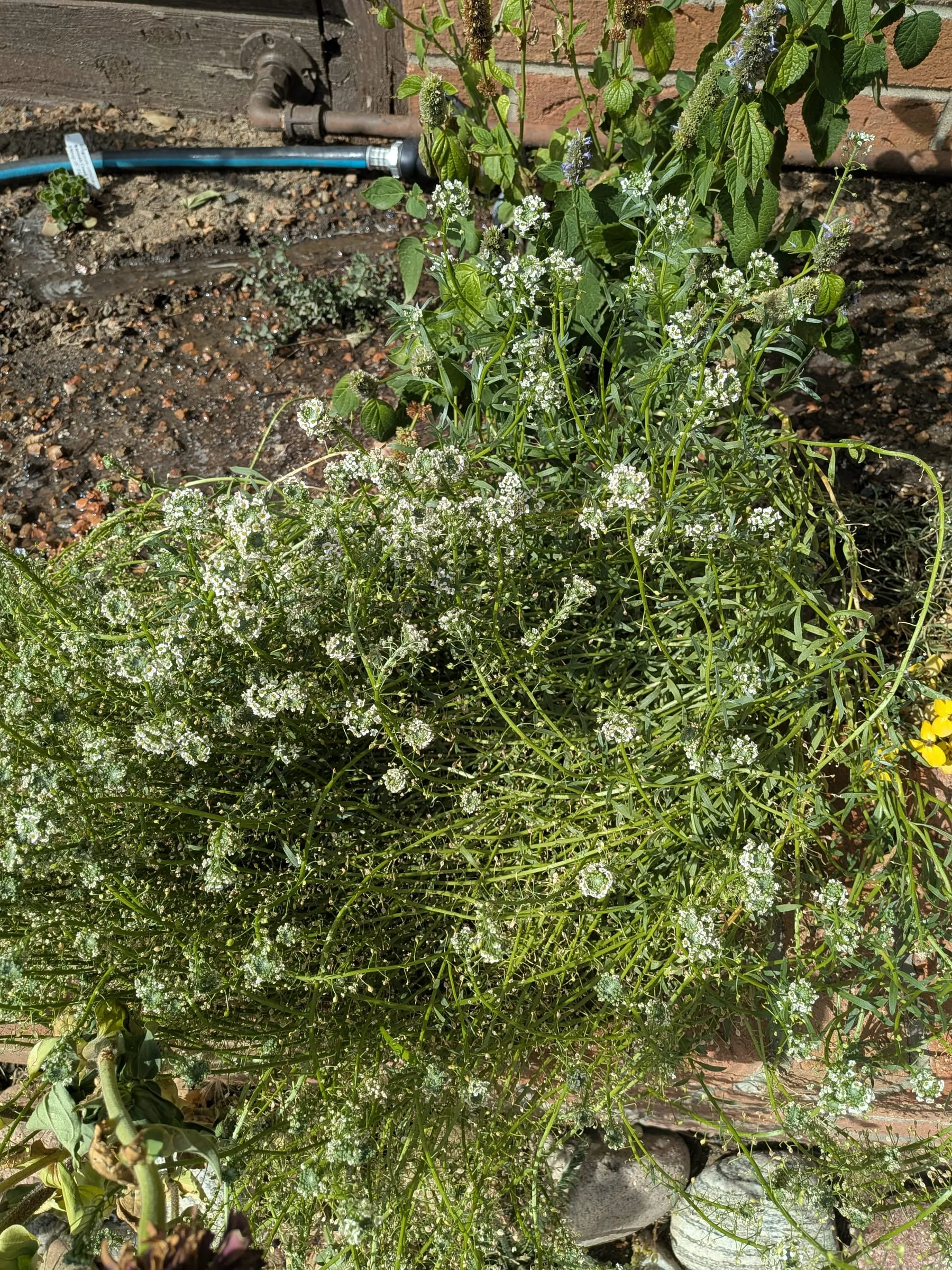
September — the best of the volunteers
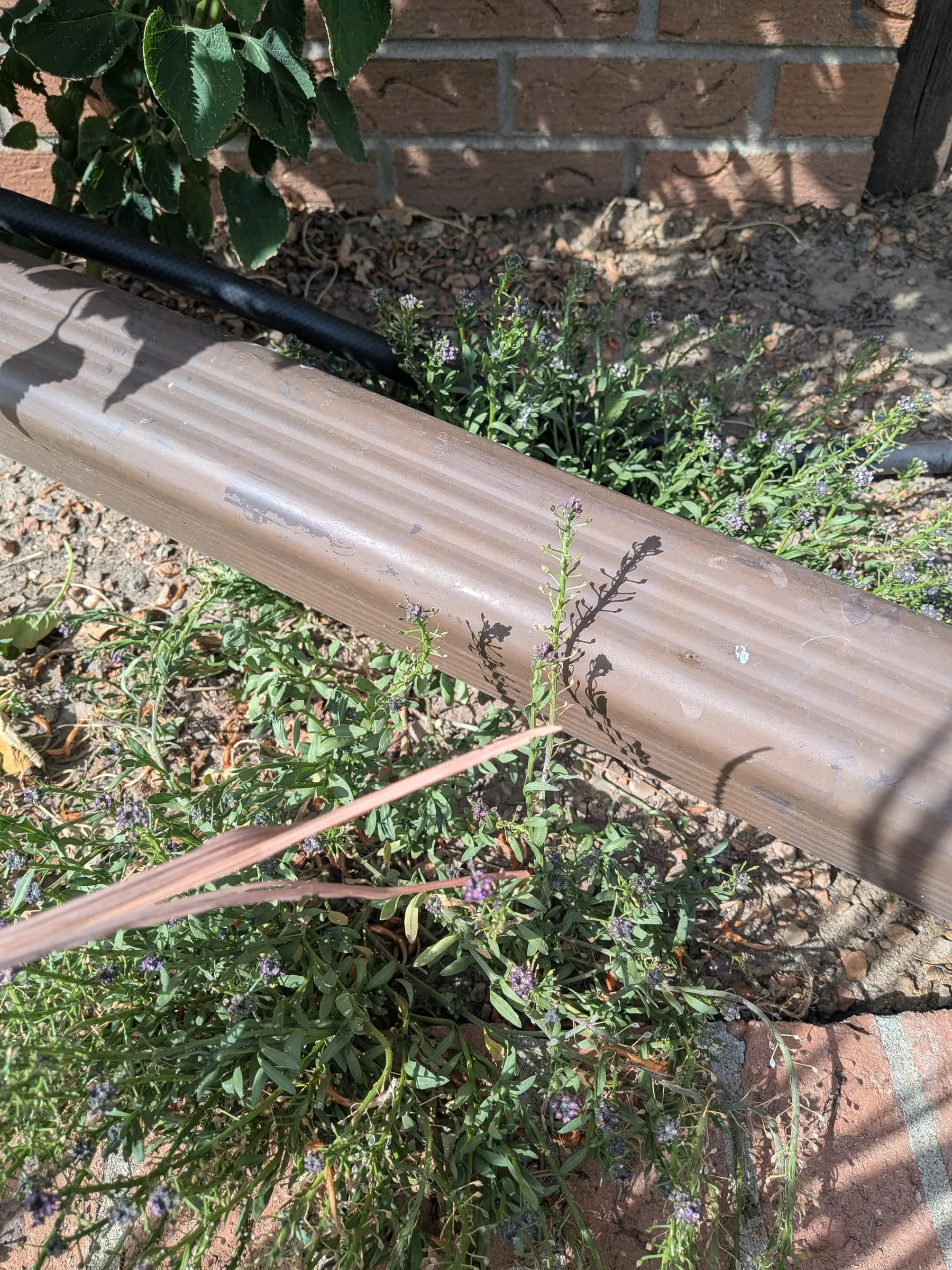
Another of the six or so that came up
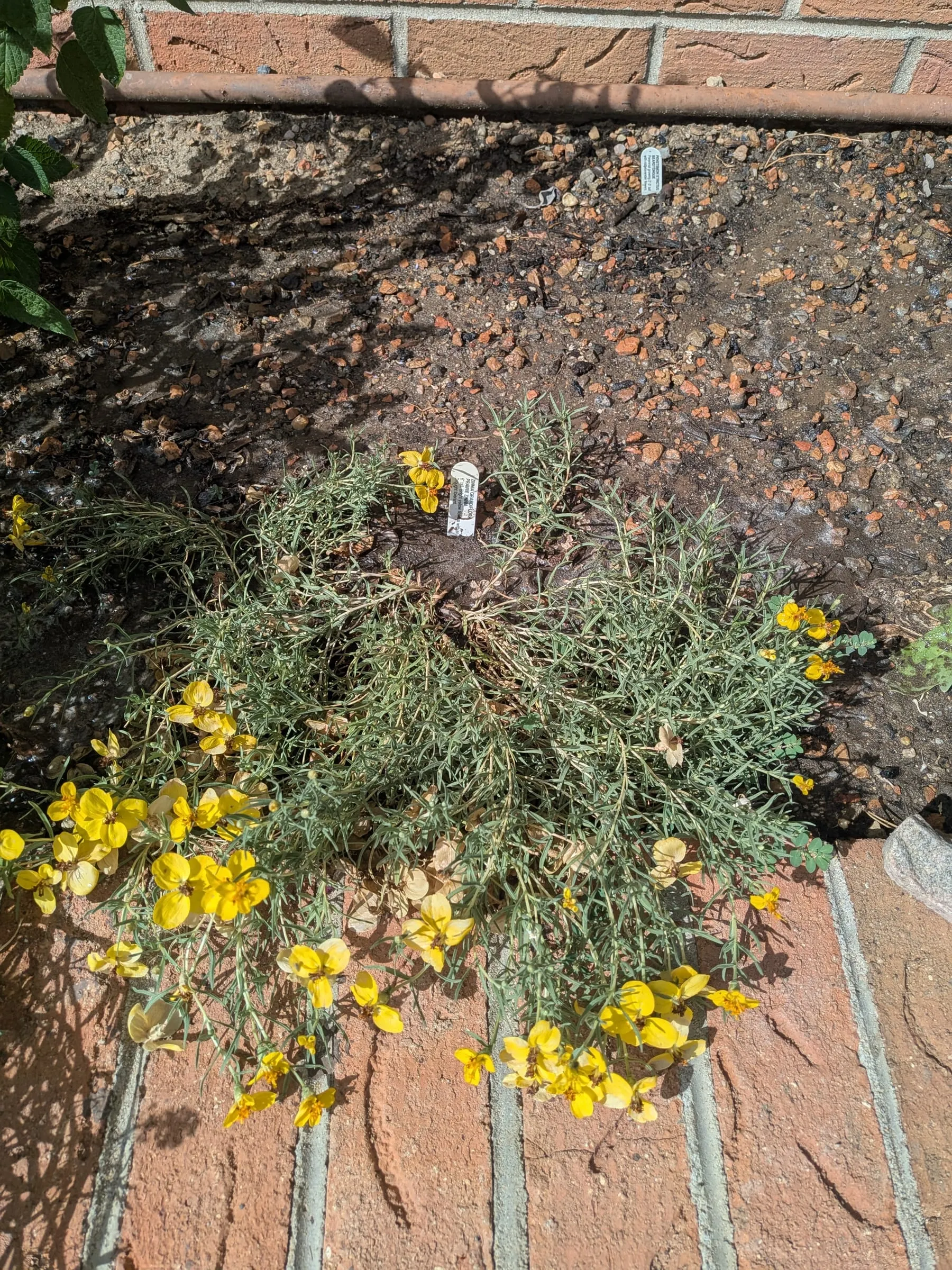
Prairie zinnia — Zinnia grandiflora
Local native nursery. Another winner. A low habit, lying along the soil and the brick wall, with constant beautiful yellow flowers all season. Drought tolerant with the best of them.
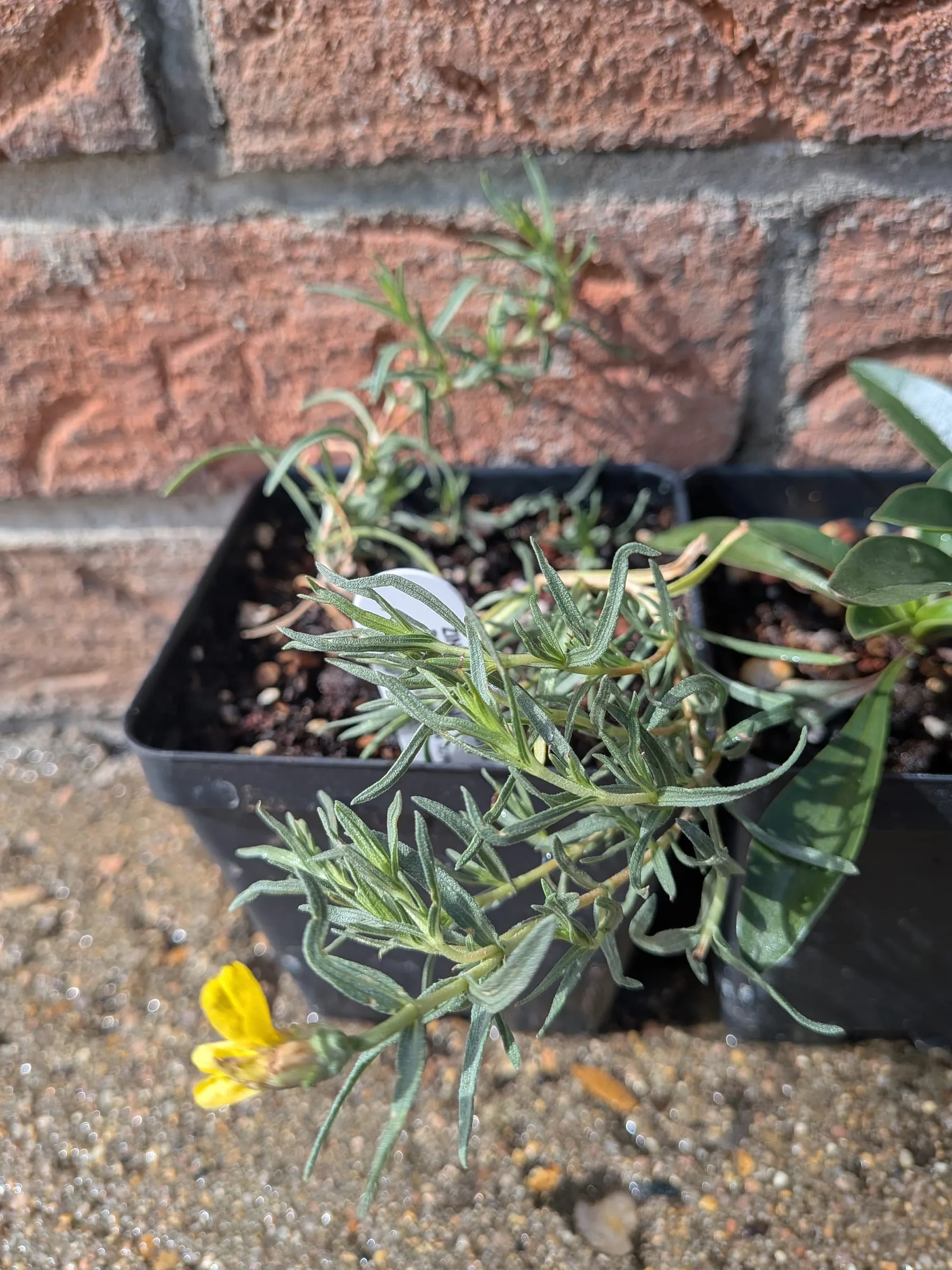
April
September
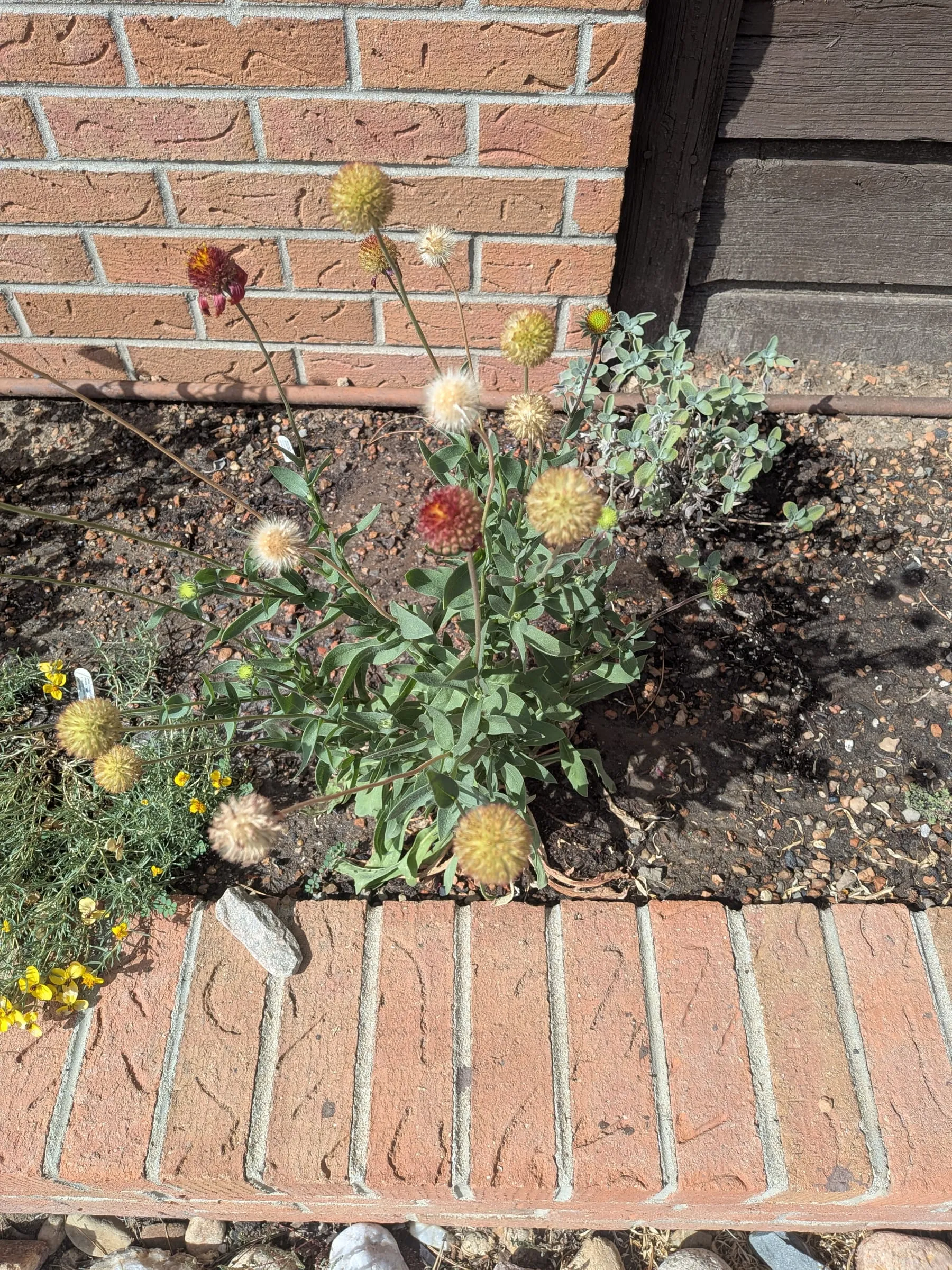
Blanket flower
Started from seed indoors and transplanted with instant success. The leaves look too tender for good drought tolerance, but it did excellently once established — good flower density, good height, and real visual appeal.
September
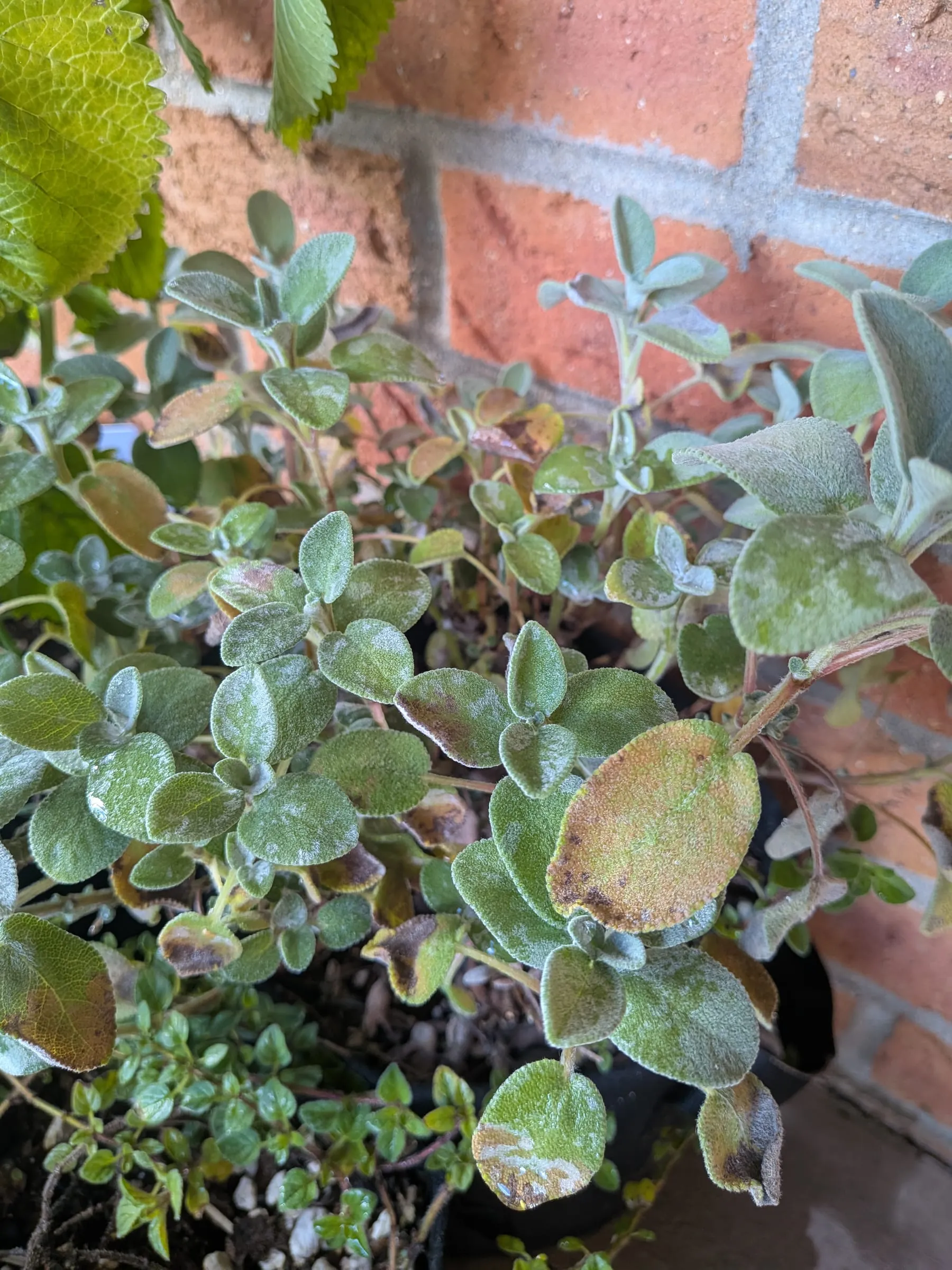
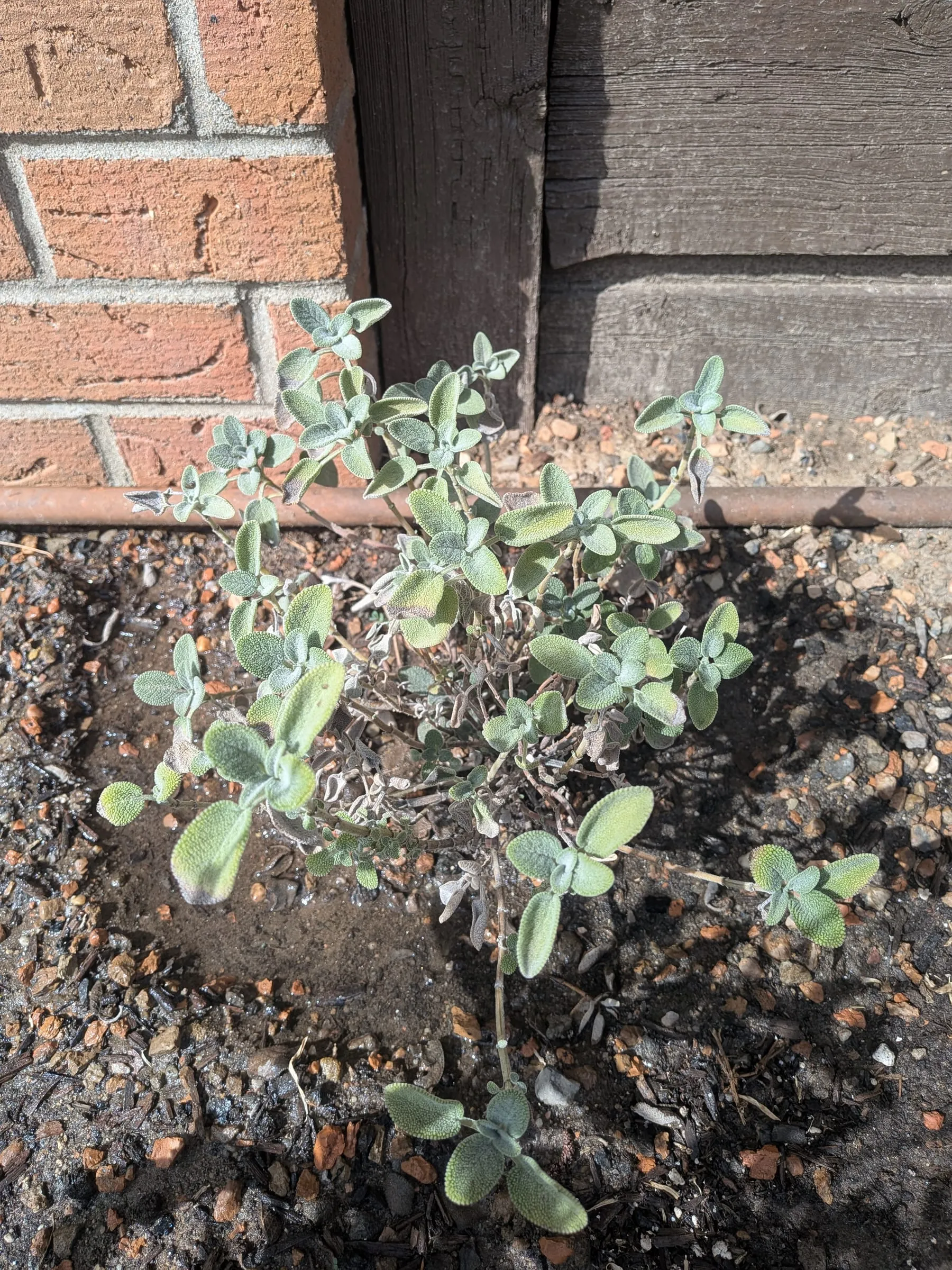
Sage, kitchen herb, species unknown
A cutting from a relative’s garden, rooted in perlite and started indoors. It did not thrive, but it survived, and it is putting out new leaves as the old ones brown and die. If it makes it through the winter it may do better next year. Experimental.
April
September — survived, did not thrive
Creeping thyme #2
Found on a local campus and taken as a root division — cuttings had failed twice before, so this variety needed roots. Fuzzy, small leaves with a dense, matting creeping habit, and dense blooms in early summer.
This is a new addition. It went in where the roadside iceplant died out, so it is much-needed ground cover on that end of the bed. I am letting it establish through late summer and early fall, keeping it well watered, and hoping it overwinters and comes back strong next spring.
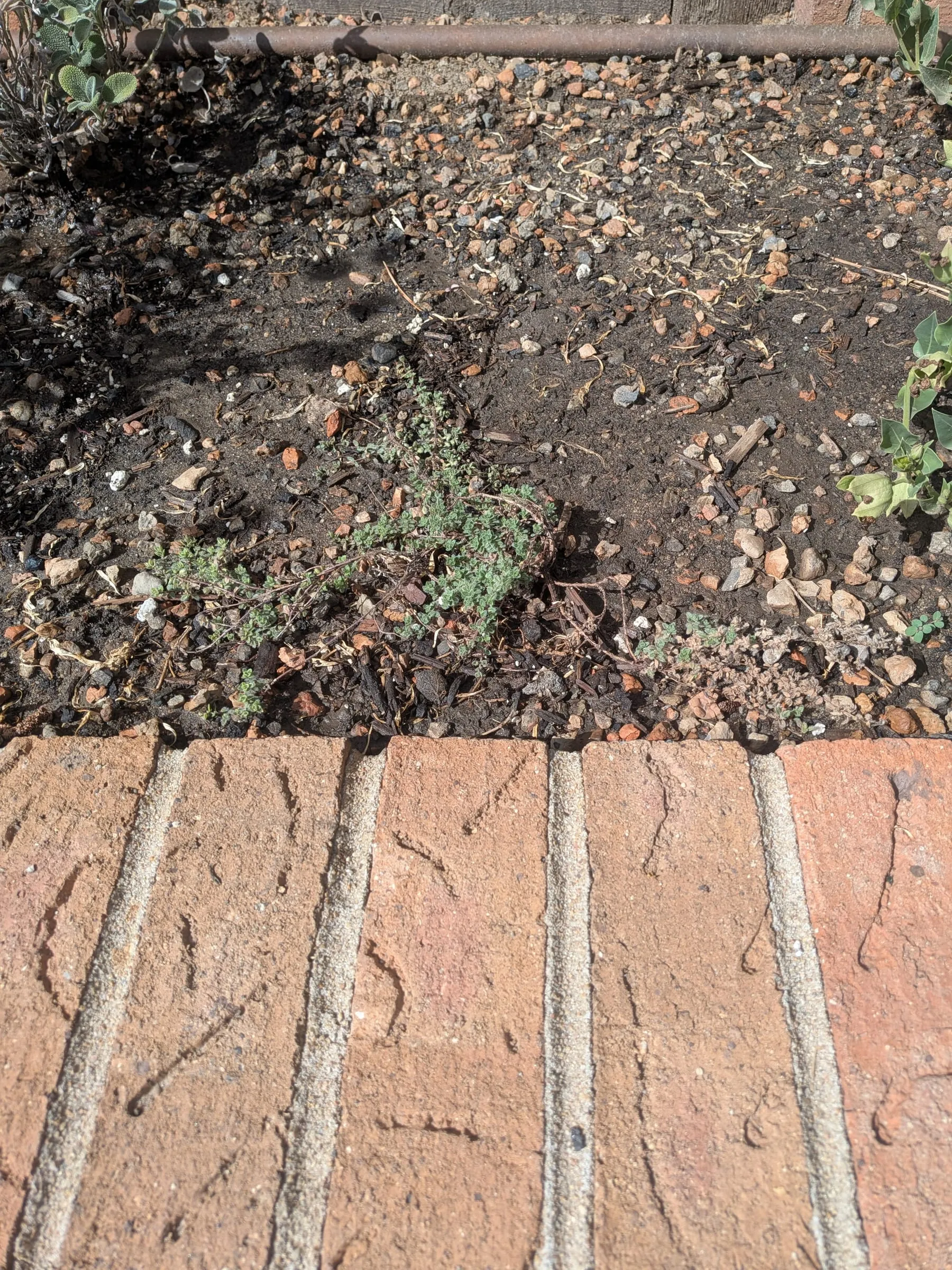
September, just planted, in the gap the iceplant left
Desert four o’clock — Mirabilis multiflora
Local native nursery. Another clear winner. It took off instantly, is extremely drought tolerant, and covered itself in beautiful multi-day blooms twice this season. It went from a small plug to a multi-foot shrub.
I planted it in the corner with nothing near it, on the assumption it would need years to fill the space. It filled it in year one.
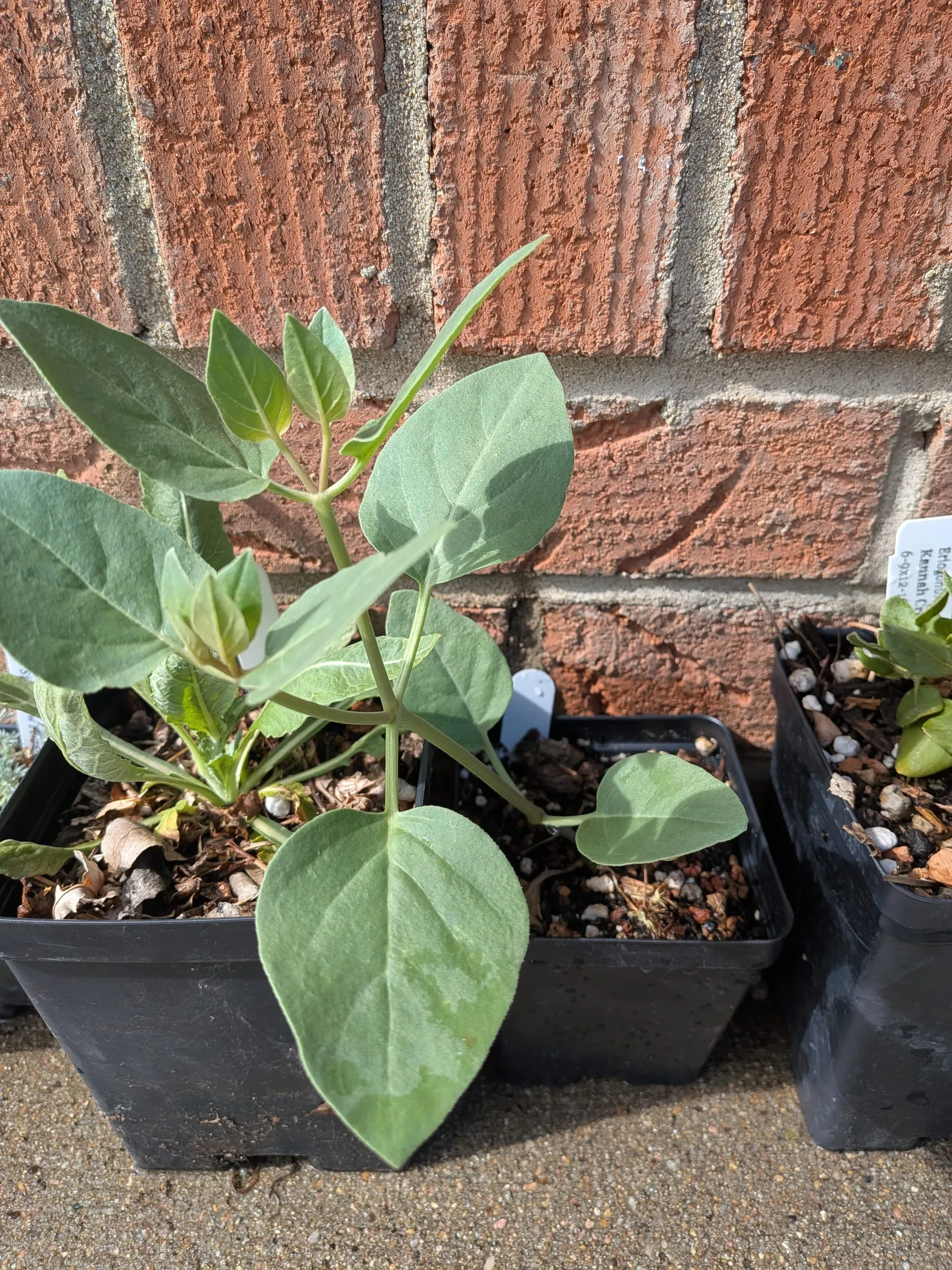
April
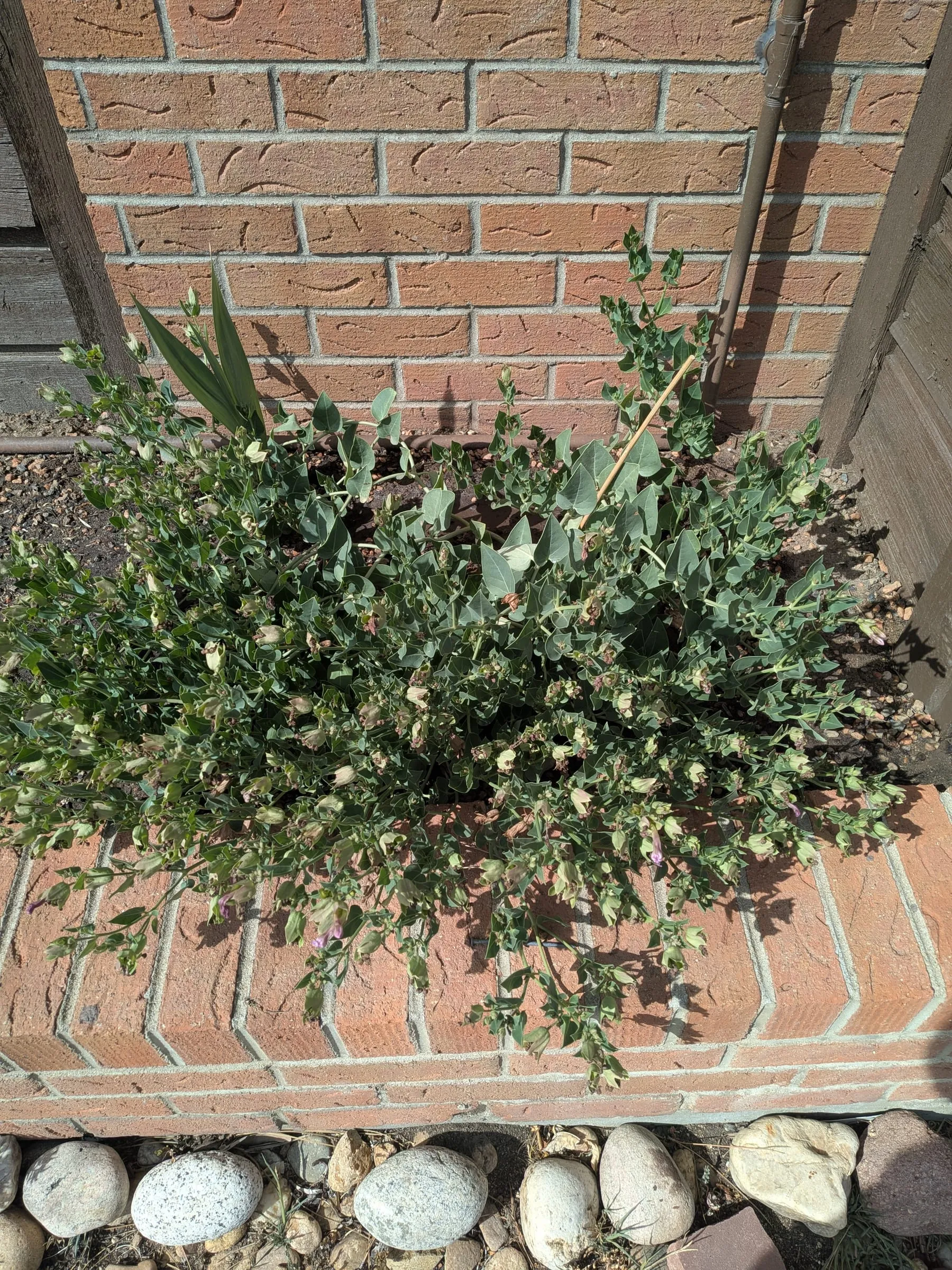
September — the same plug
The two that died
I lost both penstemons, Penstemon strictus and Penstemon grandiflorus. I underwatered them, which is a curious thing to have got wrong on a notoriously drought and heat tolerant plant — and stranger still that they were the two I had the most trouble with in a bed built specifically for that kind of plant.
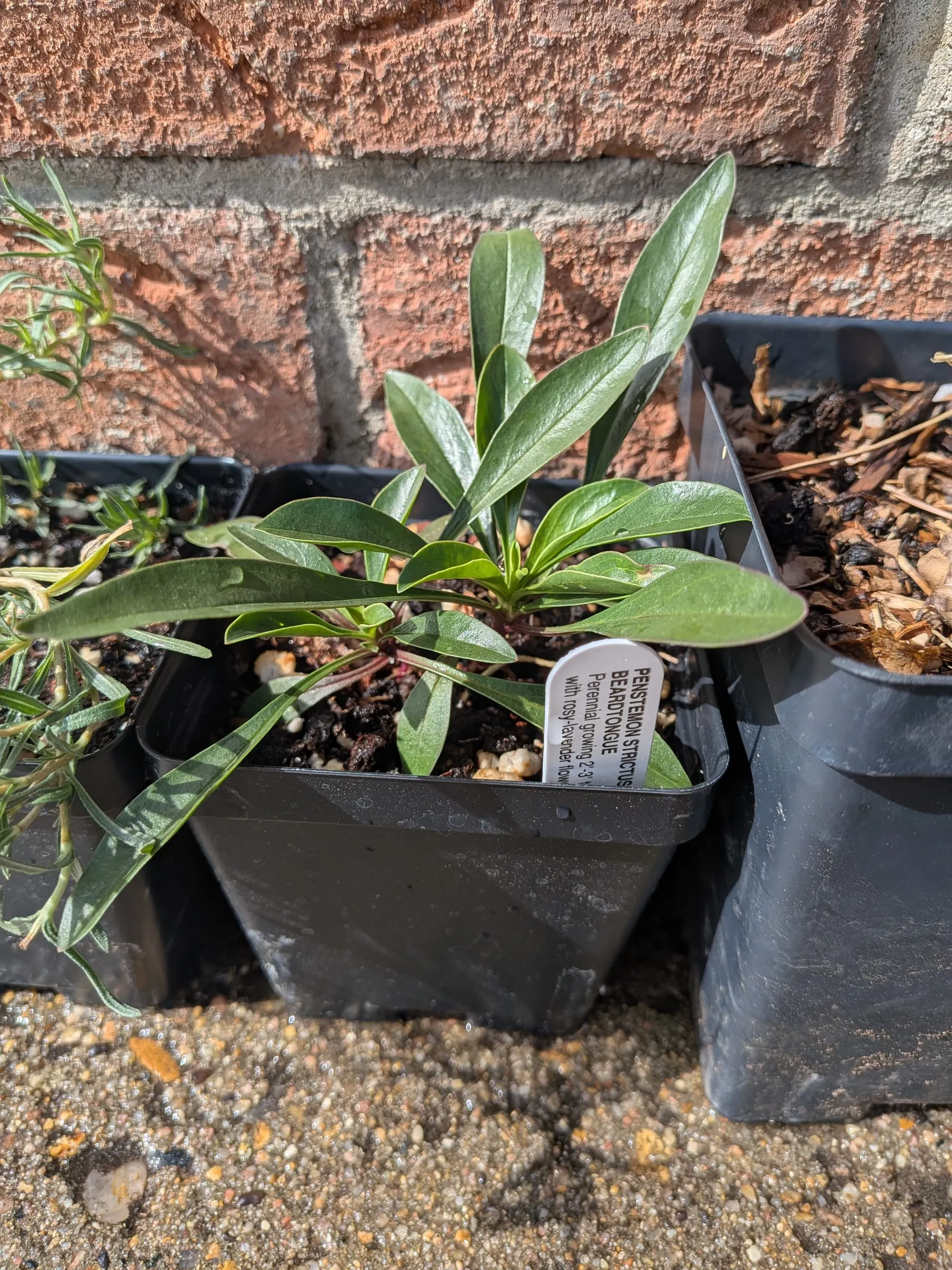
Rocky Mountain penstemon, April
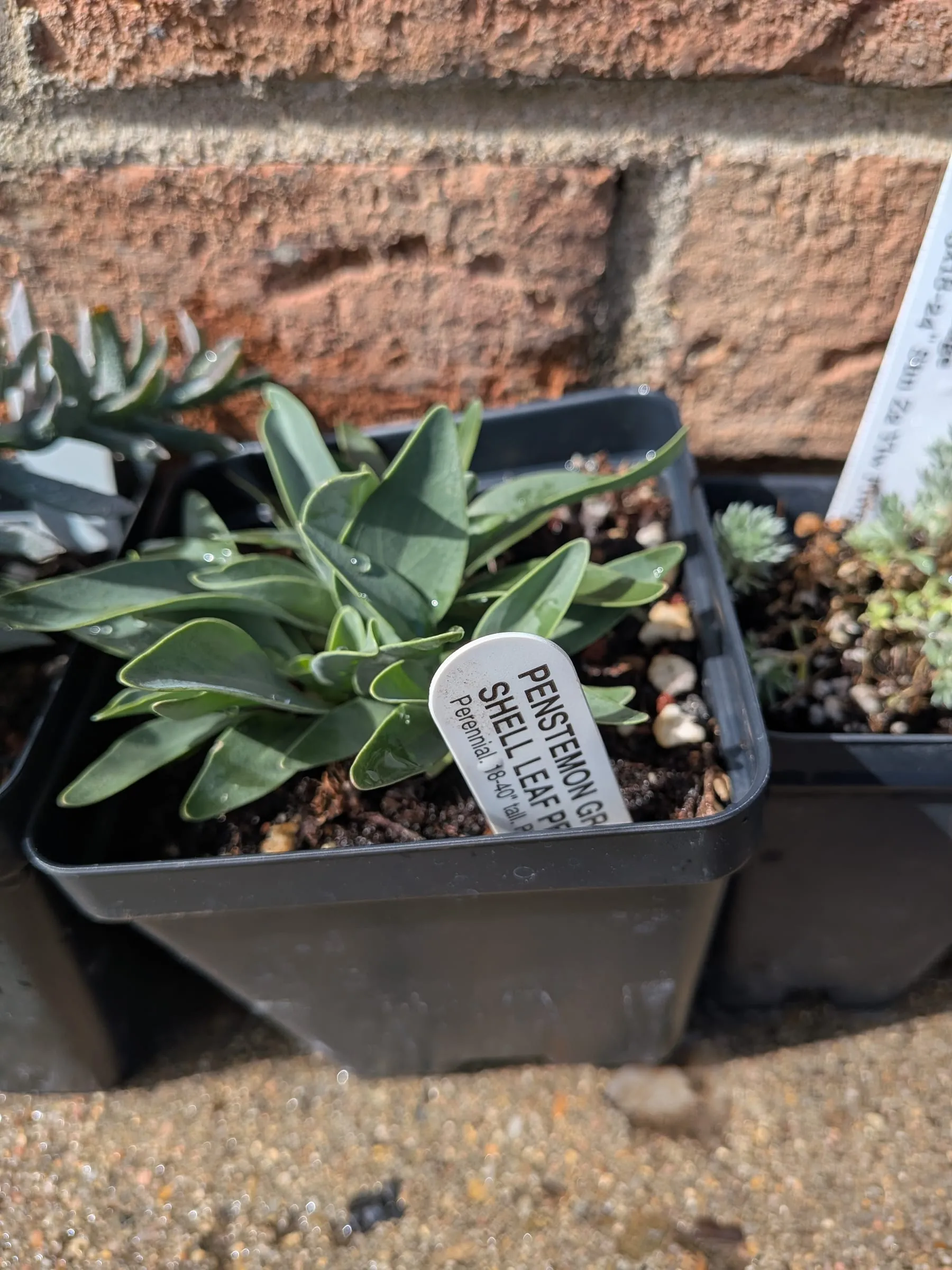
Shell leaf penstemon, April
I want to source two replacements and get them in at the end of the season, ideally late September, so they can establish in warm soil over the fall and get a better start next spring.
Year one
Sleep, creep, leap. Most of this bed is still in the sleep year, so the interesting entries are not the winners but the ones that struggled in ways I cannot yet explain — the buckwheat that did nothing and still looks fine, the flax that collapsed and came back, the iceplant patch that died from the centre out while its own cutting thrived at the other end of the bed.
The clear first-year performers were the desert four o’clock, the fringed sage, the prairie zinnia and the klip dagga. The only outright losses were the two penstemons. Neither lavender flowered and neither grew much, but that is what a first year is supposed to look like for lavender, so they go in the sleep column rather than the failure column.
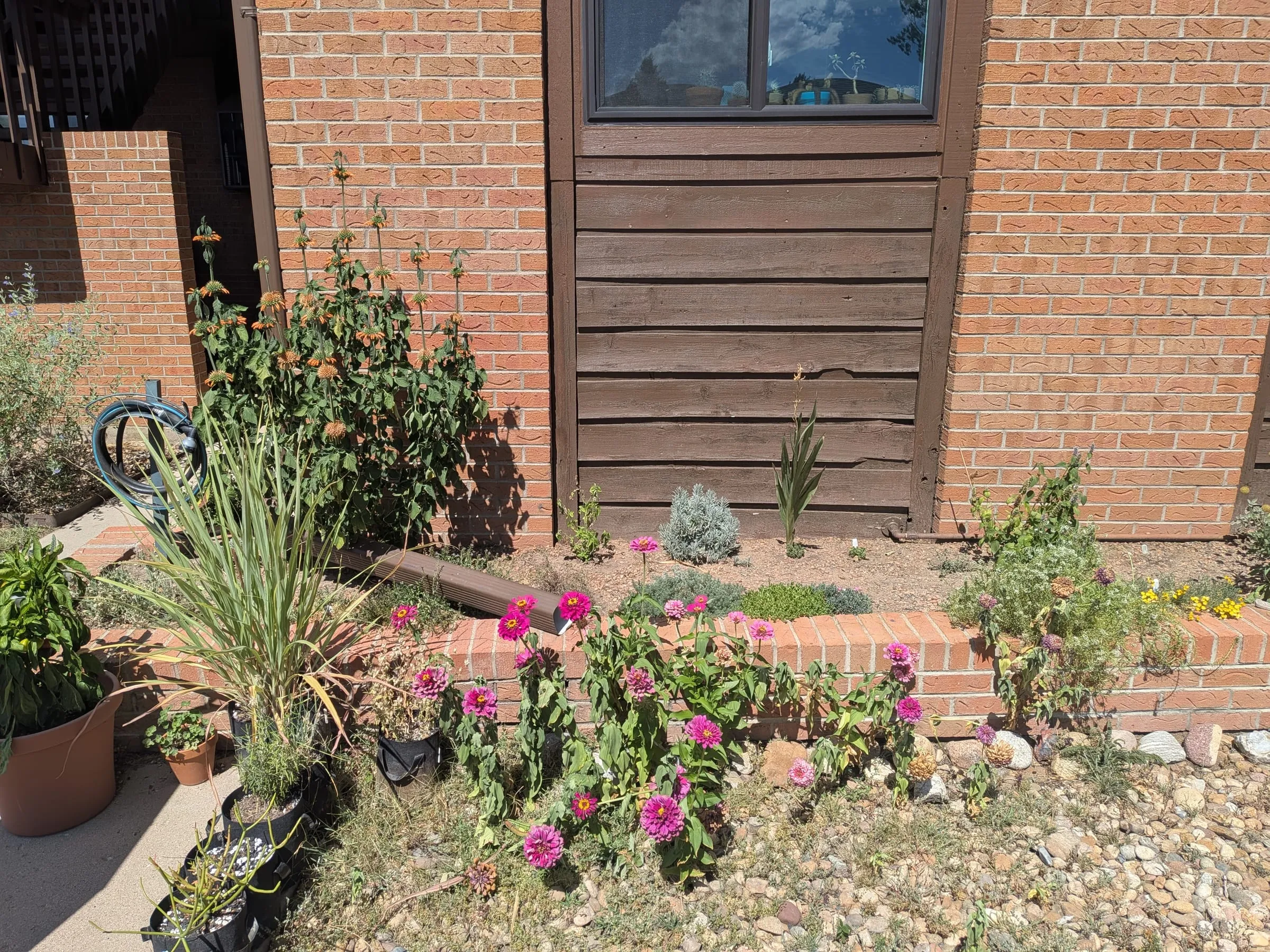
The left end. The magenta zinnias in front are in the river rock bed, not this one — they belong to a different project.
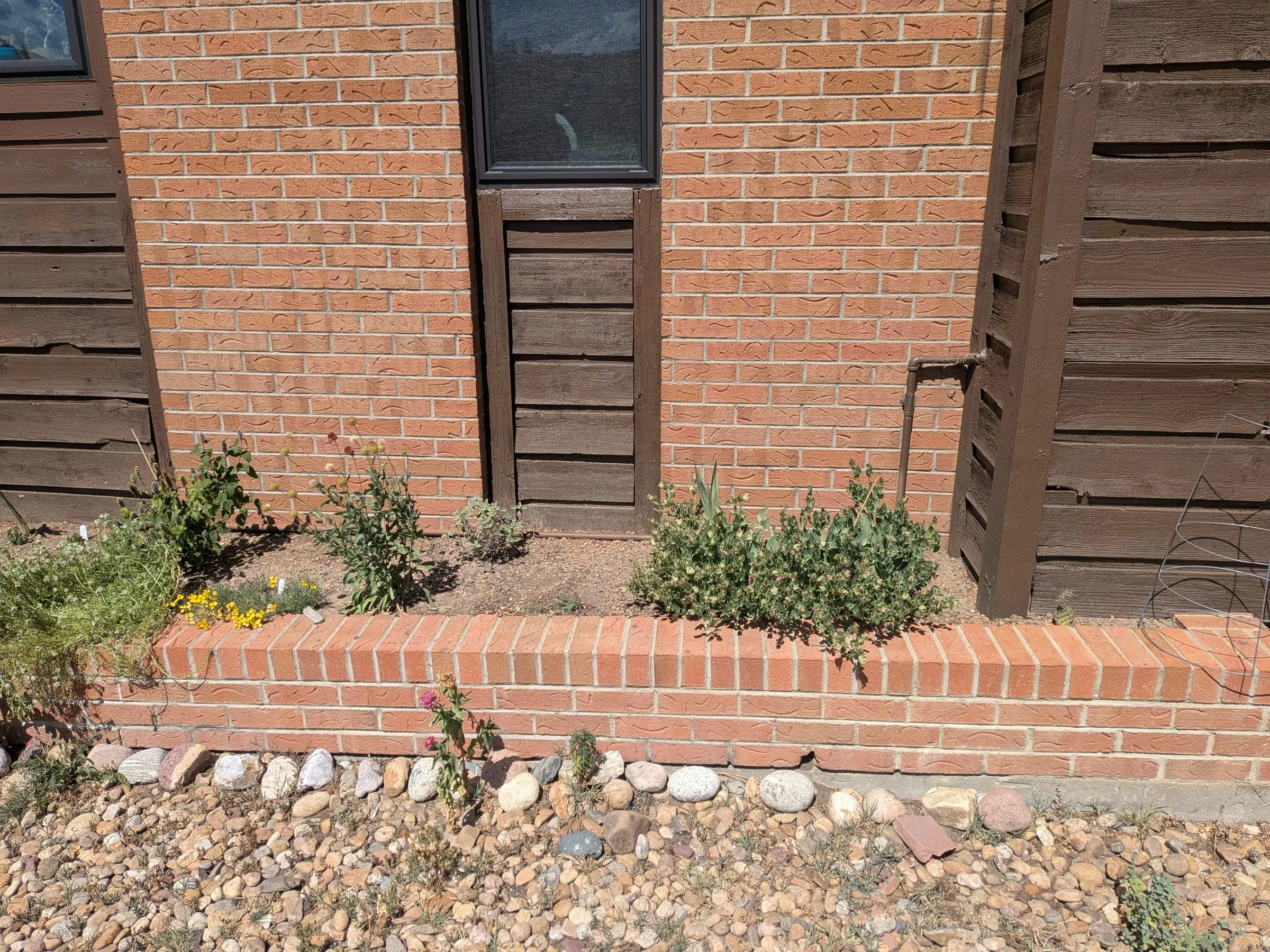
The right end. The four o’clock is the sprawl on the right, out of bloom by now.
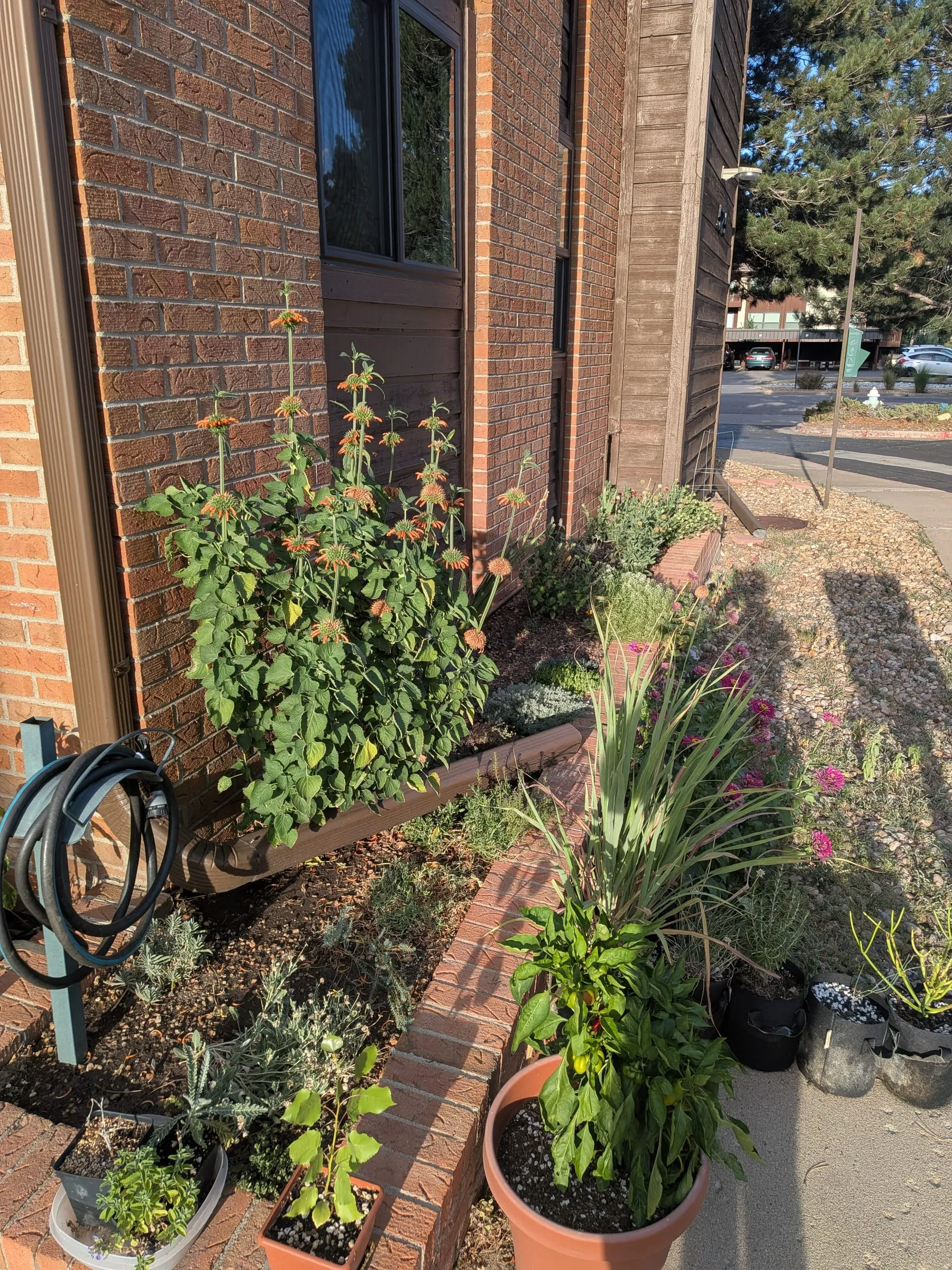
The same corner as the photo at the top of this post, four and a half months later. Same downspout elbow lying across the bed, for scale.